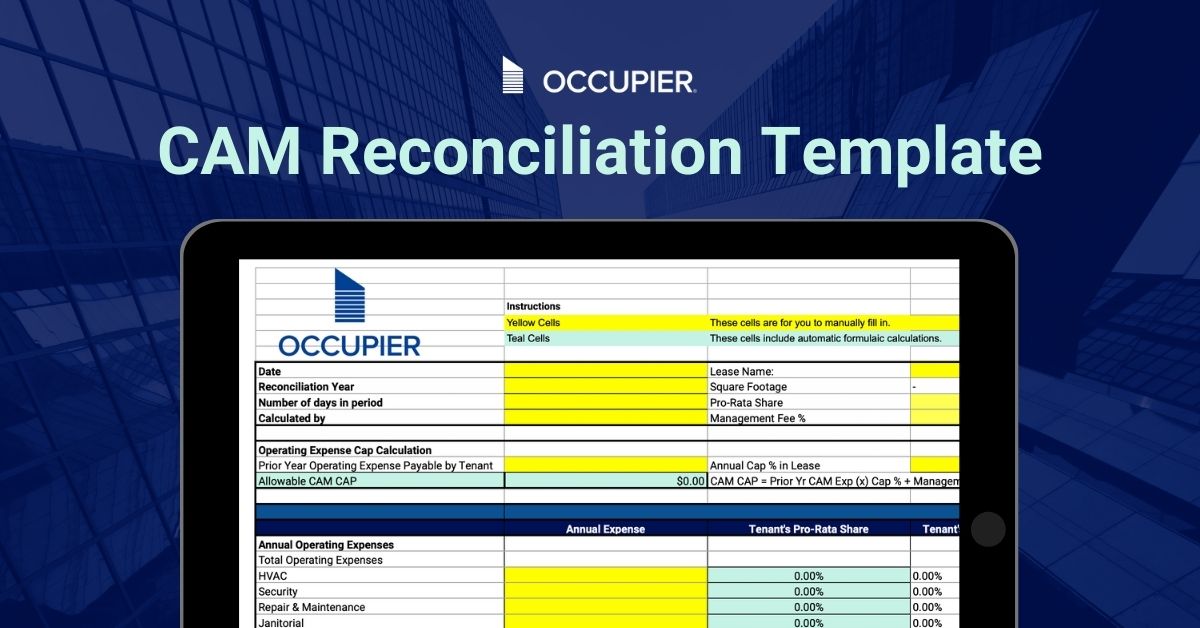
CAM Reconciliation Template
Stop overpaying your landlord. Download now to take control of your expenses and ensure fair and accurate CAM charges. What you get:
- Streamline CAM calculations — Audit and track expenses in one place.
- Standardize your process — Use a consistent format across all properties.
- Save time during year-end — Simplify your CAM true-up workflow.
Stop overpaying your Landlord and optimize your CAM + OPEX charges
Occupier Co-founder Matt Giffune and lease administration expert, Denise Hinkle sit down in this two-part series to discuss how to audit your lease portfolio CAM, OPEX, and Taxes. And ultimately how to make sure you are not overpaying your Landlord.
Frequently Asked Questions
A CAM (Common Area Maintenance) charge is an additional fee that commercial tenants are required to pay on top of their base rent. They are intended to cover the cost of maintaining and managing shared spaces within a property, such as lobbies, elevators, hallways, parking lots, and common restrooms.
They’re typically based on your leased space’s proportion of the property, as outlined in your lease.
CAM reconciliation compares estimated CAM charges paid to actual expenses, adjusting for any overpayment or underpayment.
A CAM reconciliation template helps you track and adjust charges accurately, ensuring fairness in cost distribution.
The only way to know is to audit the reconciliation statement against your lease. Pull your CAM provisions and request an itemized expense breakdown from your landlord — most leases include audit rights that entitle you to inspect the underlying records. Then verify your pro-rata share calculation, confirm excluded expenses like capital expenditures weren't included, and check that your CAM cap wasn't exceeded. Most tenants overpay because they never audit. The statement arrives, the total looks reasonable, and it gets paid. Note that most leases give tenants 30 to 90 days after receiving the statement to dispute charges — after that window closes, you've waived your right to challenge anything.
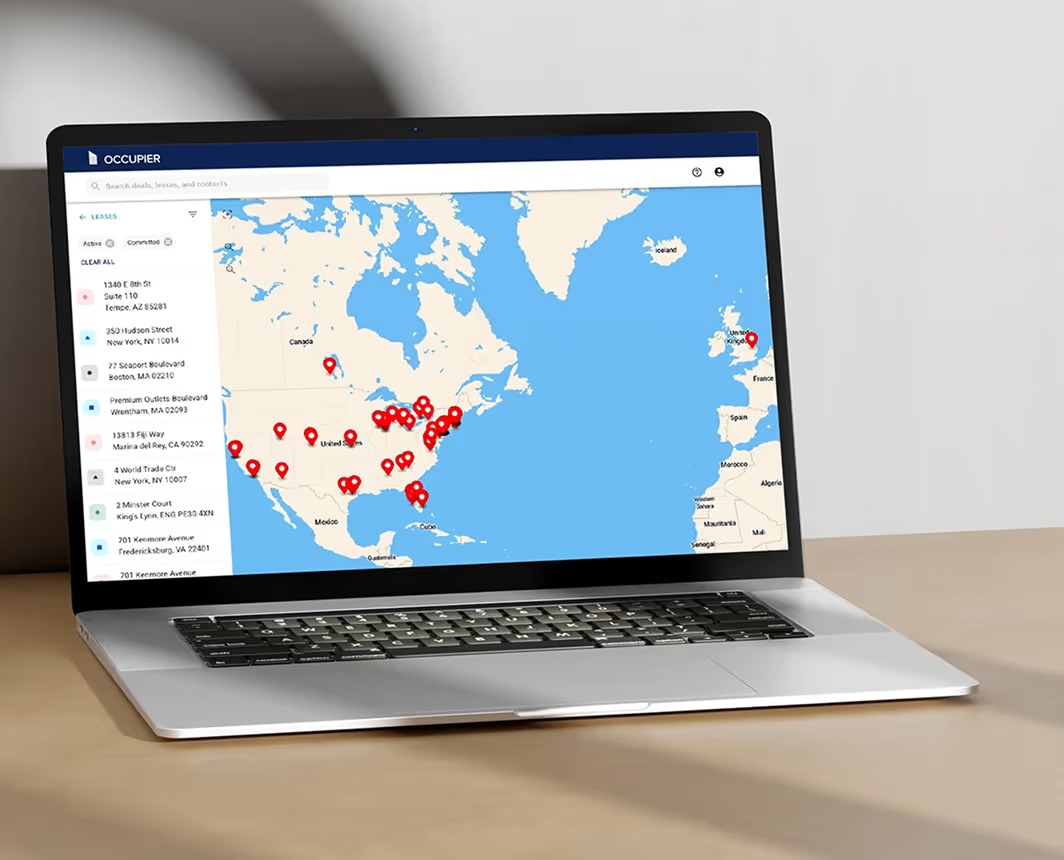
Occupier Lease Management
Never miss a critical date again.
See how Occupier keeps Real Estate and Finance teams ahead of every deadline
Boston HQ
Size:
15,000 sq ft
15,000 sq ft
Renewal options:
90 days notice
90 days notice
Lease expiration:
March 2026
March 2026
Status:
Action required
Action required
Amend Lease
Set Alert