How to Negotiate a Commercial Lease: Steps & Tips

Can you negotiate the rent on a commercial lease?
Yes. Commercial rental rates are commonly negotiated, although the landlord's willingness to adjust pricing depends on local market conditions, property demand, tenant qualifications, and other factors. Tenants can also negotiate concessions, operating expenses, and lease flexibility.
Commercial lease negotiation is the process of reaching an agreement with a landlord on rental costs, lease duration, operating expenses, and other terms that affect how a business occupies commercial property. Negotiating effectively requires understanding the lease, comparing local market conditions, and identifying which terms matter most to your operations.
Unlike residential leases, commercial leases often provide substantial room for negotiation. Tenants may be able to negotiate rent reductions, tenant improvement allowances, renewal options, expense caps, and other provisions that affect their long-term financial commitments.
For businesses leasing retail stores, offices, restaurants, or multiple commercial locations, a well-negotiated agreement can reduce unexpected costs and provide flexibility as operational needs change. This guide explains how to negotiate a commercial lease, which terms deserve the most attention, and how to evaluate proposals before signing.
What Is Commercial Lease Negotiation?
Commercial lease negotiation involves discussing and agreeing on the financial, legal, and operational terms of a lease between a commercial tenant and landlord.
The process often begins before a formal lease is drafted. A prospective tenant identifies suitable properties, researches market conditions, and submits proposed terms through a commercial lease proposal or letter of intent (LOI).
The landlord may accept those terms, reject them, or submit a counteroffer. Both parties continue negotiating until they reach an agreement or decide not to proceed.
While rental price is an important consideration, it is only one part of the process. A commercial lease also determines who pays operating expenses, handles maintenance, covers property insurance, and has the right to renew, expand, sublease, or terminate the agreement.
For example, a retailer might negotiate a lower monthly rental rate but agree to uncapped operating expenses and significant annual increases. Over a five-year term, those additional costs could outweigh the initial savings.
Effective negotiation considers the total financial commitment rather than focusing exclusively on the advertised rent.
How to Prepare for Commercial Lease Negotiations
The strongest negotiating position begins with preparation. Understanding your business requirements, financial limits, and alternatives makes it easier to evaluate offers and determine where concessions are worthwhile.
Define Your Business and Space Requirements
Before approaching a landlord, establish what your business needs from the property.
Consider location, square footage, layout, accessibility, parking, customer traffic, loading facilities, and infrastructure requirements.
A restaurant may prioritize ventilation, grease traps, and kitchen capacity, while an office tenant may need reliable internet connectivity, meeting rooms, and room for future expansion.
Separate essential requirements from preferences. Knowing which features are nonnegotiable helps prevent accepting a lower rental rate for a property that does not support business operations.
Research Local Market Conditions
Commercial rental rates vary by location, property type, building condition, vacancy levels, and market demand.
Research comparable properties to understand the market rate for similar space. Examine asking rents, available concessions, typical lease lengths, and the landlord's competitive alternatives.
For example, a landlord with several vacant units may be more willing to negotiate tenant improvements or rent-free periods than a landlord with limited available space.
Comparable data also helps tenants support counteroffers with evidence rather than relying on an arbitrary proposed price.
Establish Your Total Occupancy Budget
Your lease budget should include more than base rent.
Depending on the agreement, occupancy costs may include property taxes, insurance, common area maintenance charges, utilities, security deposits, and tenant improvements.
Calculate the expected expenses over the entire lease term, including scheduled rent increases.
For companies managing multiple locations, the proposed commitment should also fit broader portfolio budgets and financial projections.
Work With Qualified Professionals
A tenant-representation broker can provide market information, identify alternative properties, and help negotiate business terms.
A commercial real estate attorney can review contractual obligations, clarify ambiguous language, and identify risks that might not be apparent from the financial proposal.
These roles serve different purposes, and involving the appropriate professionals early can reduce the likelihood of overlooking important provisions.
What Commercial Lease Terms Should You Negotiate?
Commercial lease agreements contain several provisions that can affect occupancy costs and operational flexibility.
Understanding these terms allows tenants to compare proposals more accurately and negotiate the conditions that matter most.
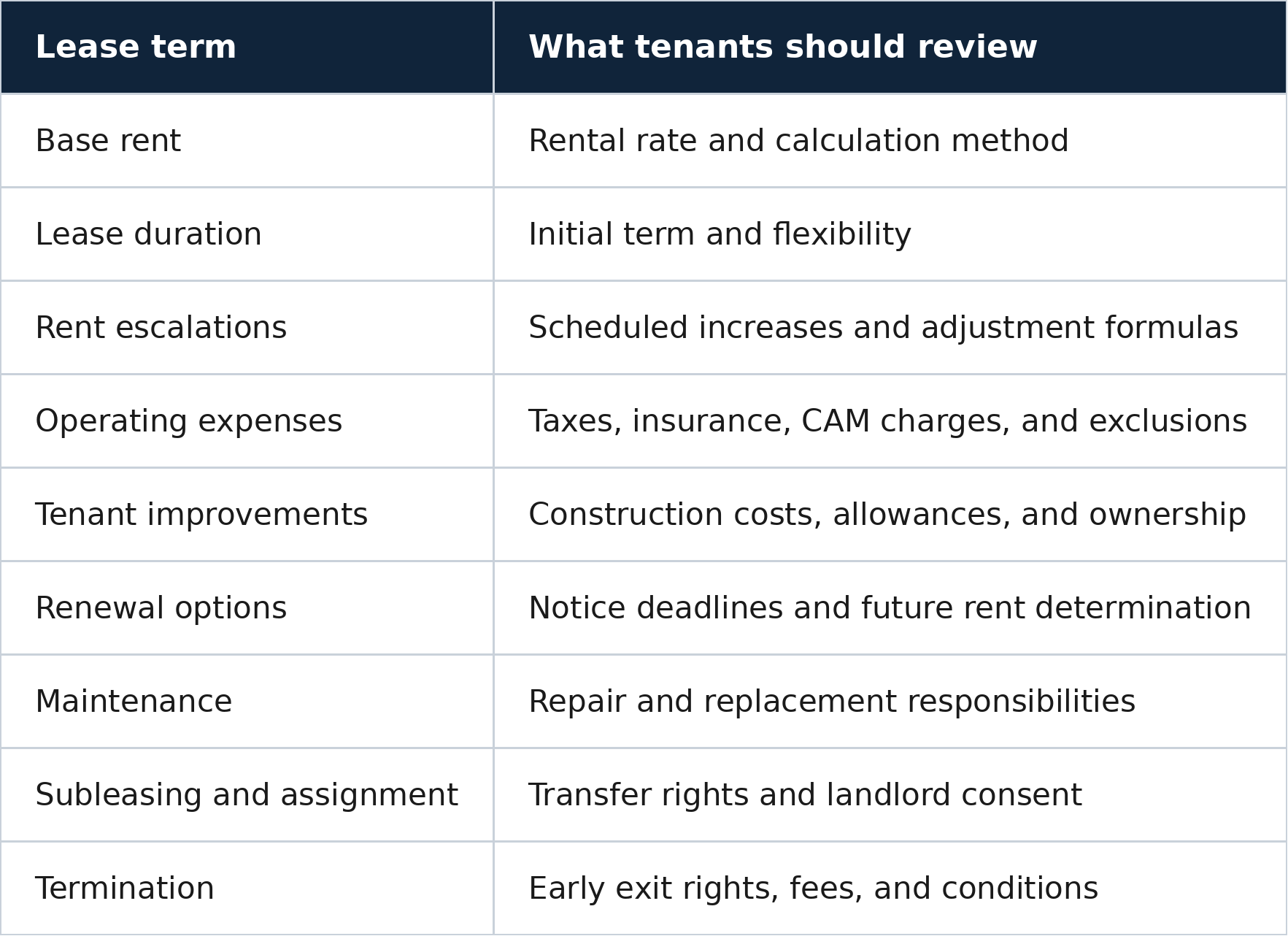
Base Rent and Rent Structure
Begin by confirming how rent is calculated and which expenses are included.
A gross lease generally incorporates many property operating expenses into the rent, while a net lease typically requires tenants to pay certain expenses separately.
A modified gross lease divides expenses between the parties according to negotiated terms.
These differences make comparing quoted rental rates alone misleading.
For example, a triple-net lease offering lower base rent may produce higher occupancy costs once taxes, insurance, and common area maintenance are included.
Before making an offer, review the different commercial lease types and determine which structure best fits your business.
Operating Expenses and CAM Charges
Common area maintenance (CAM) charges can represent a substantial portion of commercial occupancy costs.
Depending on the agreement, tenants may pay a proportionate share of landscaping, parking lot maintenance, security, cleaning, and shared building services.
Negotiate clear definitions of recoverable expenses, exclusions, and the method used to calculate your share.
Where appropriate, request caps on annual increases in controllable operating expenses and rights to review or audit supporting statements.
Not all operating expenses can reasonably be capped. Property taxes, insurance premiums, and other costs outside the landlord's direct control may require different treatment.
Occupier's guide to CAM charges explains how these expenses work and why tenants should review the lease language carefully.
Rent Escalations and Lease Duration
Commercial leases often include scheduled rent increases.
These may use fixed annual percentages, predetermined dollar increases, or adjustments tied to an index.
Consider how the escalation structure affects costs across the full lease term.
A longer agreement may give the landlord more income stability and the tenant more occupancy certainty. In exchange, tenants may be able to negotiate lower rent, additional concessions, or improved renewal terms.
However, longer commitments can create financial exposure if the business outgrows the property or needs to relocate.
The lease duration should reflect both current requirements and realistic business forecasts.
Tenant Improvement Allowances
Tenant improvements are modifications made to prepare a commercial property for the tenant's business operations.
These may include partitions, flooring, electrical work, fixtures, plumbing, and other alterations.
Landlords sometimes offer a tenant improvement allowance to cover part of the construction costs.
When negotiating an allowance, clarify the amount, eligible expenses, construction responsibilities, reimbursement requirements, and deadlines.
Tenants should also establish what happens if construction exceeds the allowance or delays occupancy.
A generous allowance may be less valuable if the lease shifts substantial construction risks or restoration costs to the tenant.
Rent-Free Periods and Other Incentives
Rent abatement allows a tenant to occupy or prepare a property without paying some or all of the agreed rent for a specified period.
Landlords may offer free rent during construction, before business operations begin, or as part of a broader financial proposal.
However, tenants should confirm whether operating expenses remain payable during the abatement period.
Other possible incentives include parking concessions, reduced security deposits, additional improvement allowances, and phased rent increases.
These concessions should be evaluated together rather than independently.
For example, three months of free base rent might offer less total value than a modest rent reduction over a long lease term.
Renewal, Expansion, and Termination Rights
Commercial lease terms should accommodate reasonable changes in business requirements.
Renewal options may allow tenants to remain in the property after the initial term, while expansion rights can provide access to additional space when it becomes available.
Termination provisions may offer flexibility to exit under specified conditions, potentially subject to notice requirements and fees.
Negotiate clear deadlines, procedures, and financial conditions for exercising these rights.
An option is only useful when its terms are practical and the business has a reliable process for tracking the applicable dates.
Maintenance, Insurance, and Permitted Use
Lease agreements should clearly allocate responsibility for structural repairs, HVAC systems, plumbing, utilities, routine maintenance, and other property-related work.
Tenants should also verify insurance and indemnification requirements with qualified legal counsel.
The permitted-use clause must allow the business to conduct its intended activities, subject to zoning, licensing, and other applicable requirements.
Retail businesses may also want to negotiate exclusivity protections that restrict certain competing uses within the same development.
Finally, review assignment and subleasing provisions. Restrictions on transferring the lease can make relocation or downsizing more difficult.
How to Negotiate a Commercial Lease Step by Step
After reviewing the property's terms and establishing your priorities, the next stage is developing and presenting a proposal.
Step 1: Create a Negotiation Checklist
List the provisions that matter most to your business, including rent, lease length, operating expenses, tenant improvements, and renewal rights.
Rank them according to importance.
For each major item, establish your preferred outcome, acceptable alternative, and conditions that would make the agreement unsuitable.
This makes it easier to evaluate counteroffers without losing sight of the business's financial and operational requirements.
Step 2: Prepare a Commercial Lease Proposal
A lease proposal outlines the main terms the tenant wants to negotiate.
It typically includes the proposed premises, rental rate, lease duration, commencement date, concessions, improvement requirements, and other material conditions.
Use market data to support your financial proposal and identify areas where you can offer flexibility.
For example, a tenant might propose a longer lease in exchange for a larger improvement allowance or additional free rent.
A structured proposal helps both parties identify disagreements before committing resources to detailed lease documentation.
Occupier's commercial lease proposal guide covers the information commonly included in a proposal.
Step 3: Submit and Discuss Your Initial Offer
Present the proposal to the landlord or their representative and explain the reasoning behind your requested terms.
Market comparisons, business requirements, and financial projections can provide context for the offer.
Keep discussions professional and focus on identifying an arrangement that meets both parties' needs.
A landlord may prioritize income stability, creditworthy tenants, or limited improvement costs. Understanding these priorities can reveal opportunities for negotiation beyond the rental rate.
Step 4: Evaluate Counteroffers Carefully
When the landlord responds, compare the revised terms with your original proposal and financial limits.
Avoid evaluating each concession in isolation.
A lower rental rate accompanied by higher operating expense obligations might increase total costs. Similarly, a larger improvement allowance may come with a longer lease commitment.
Review the full financial impact before accepting or proposing changes.
Where negotiations stall, consider alternative structures that address the underlying concerns.
Step 5: Confirm Terms in an LOI
A letter of intent records the principal business terms negotiated between the parties before the final lease is prepared.
It may address base rent, commencement dates, renewal rights, concessions, construction responsibilities, and other significant provisions.
An LOI is often largely nonbinding, but certain provisions may be legally binding depending on its wording and applicable law.
Legal counsel should review the document before signing.
Clear terms at this stage can reduce the likelihood of disagreements during final lease drafting.
Step 6: Review and Sign the Final Agreement
Before signing, confirm that the final lease accurately reflects the negotiated business terms.
Review the rent schedule, expense provisions, incentives, renewal options, permitted use, insurance requirements, and landlord and tenant responsibilities.
Pay particular attention to ambiguous wording or provisions that changed during legal drafting.
A qualified commercial lease attorney should help identify inconsistencies and explain the legal consequences of significant clauses.
Once the parties execute the agreement, retain the signed lease and supporting documents in an organized system.
Commercial Lease Negotiation Example
Consider a business negotiating a five-year lease for 4,000 square feet of office space.
The landlord initially proposes annual base rent of $30 per square foot with a 3% annual increase.
The tenant negotiates a lower initial rate of $28 per square foot while keeping the same escalation structure.
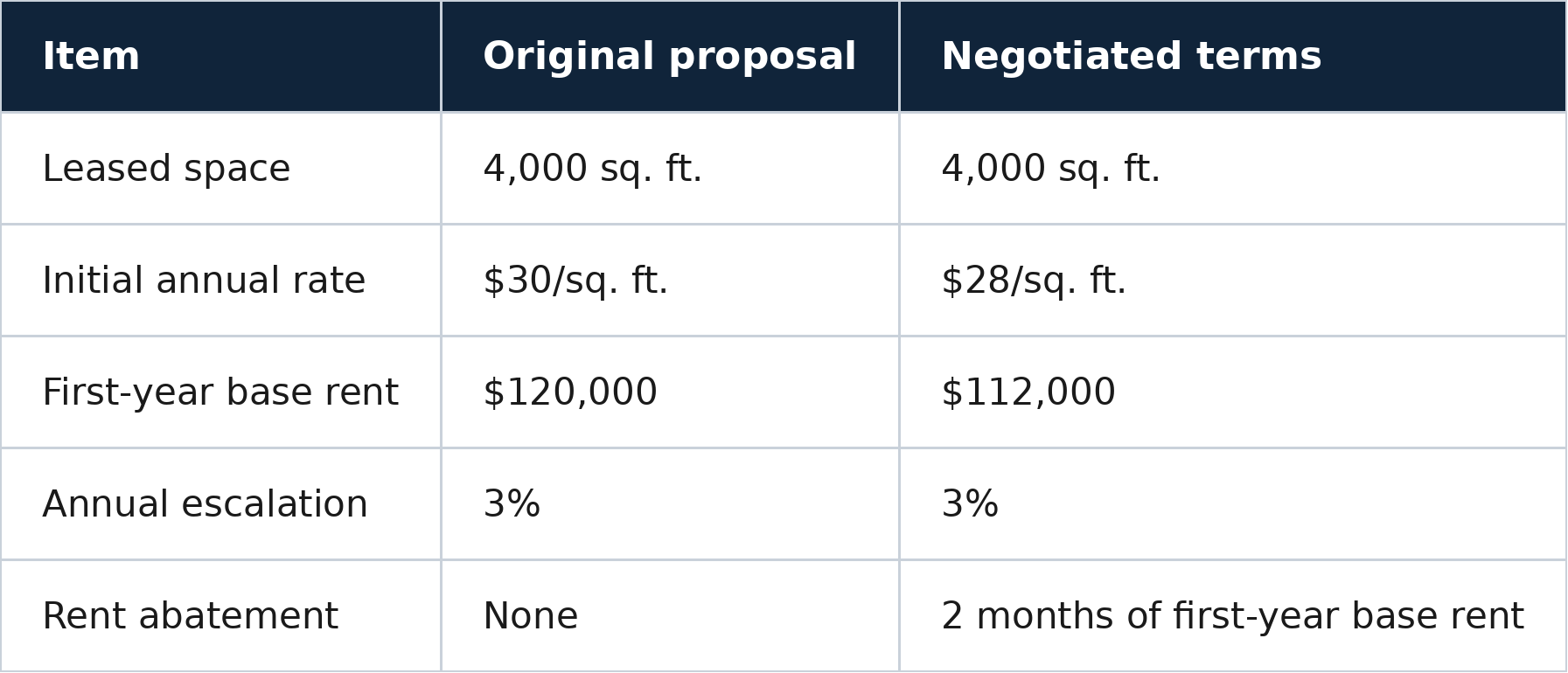
At the original rate, the first year's base rent would be $120,000.
At the negotiated rate, the annual amount becomes $112,000. Two months of first-year base rent abatement would provide an additional $18,666.67 in savings, assuming the abatement applies to base rent only.
The tenant's first-year base rent would therefore be approximately $93,333.33, excluding operating expenses and other charges.
The example shows why negotiating both the rental rate and concessions can make a meaningful difference.
However, tenants should evaluate all five years of costs, including escalation, operating expenses, and any additional obligations, before determining whether the final proposal is favorable.
Common Commercial Lease Negotiation Mistakes
One common mistake is focusing entirely on base rent. Operating expenses, maintenance responsibilities, and scheduled increases may represent substantial additional costs.
Another is failing to negotiate renewal or termination provisions. A lease that works today may become restrictive when the business expands, relocates, or changes its operations.
Tenants may also accept broad or unclear expense provisions without understanding how additional charges are calculated.
Waiting until the final stage to involve an attorney can create problems if important business terms have already been agreed upon without sufficient review.
Finally, relying on verbal assurances is risky. Significant concessions, construction promises, and other obligations should be reflected accurately in the signed agreement.
Managing Commercial Leases After Negotiation
Signing the agreement marks the beginning of an ongoing financial and operational commitment.
Commercial tenants need to track rental payments, escalation dates, renewal notice windows, insurance obligations, and other lease requirements.
Missing a renewal notice deadline can result in the loss of an important contractual right, while overlooking an escalation may create budgeting or payment discrepancies.
For businesses operating multiple locations, these responsibilities become more difficult when agreements and amendments are stored across separate spreadsheets or departments.
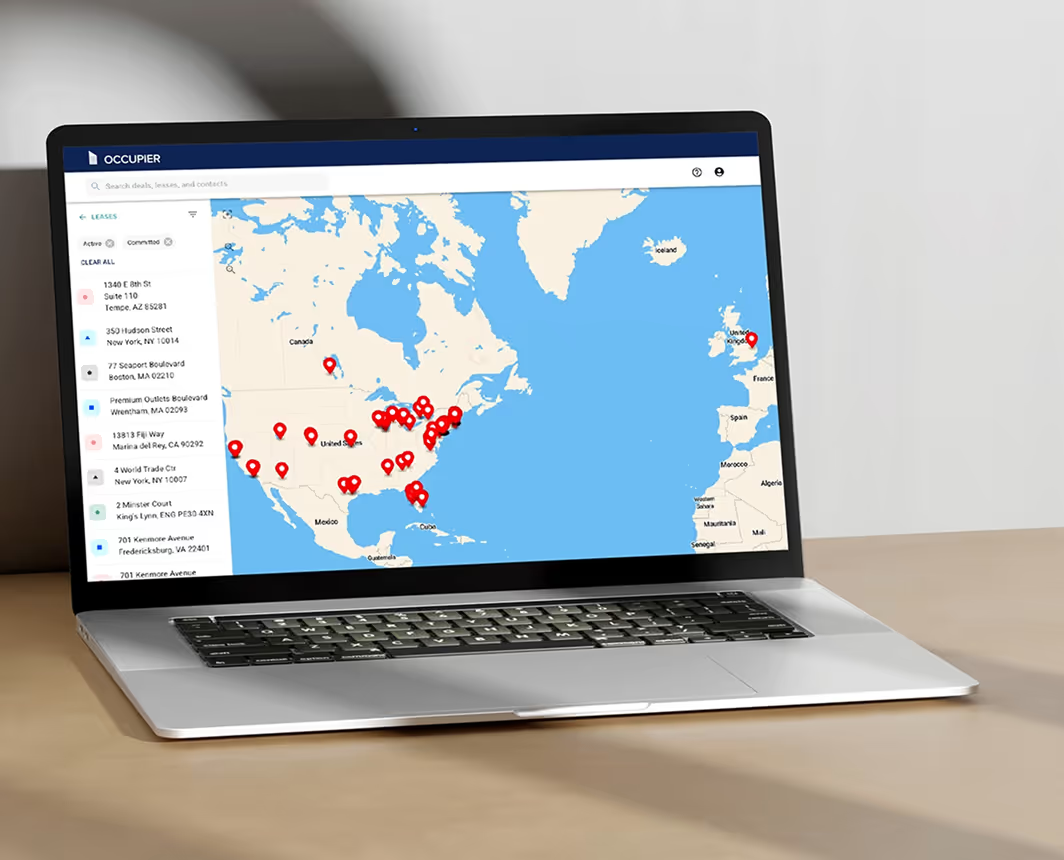
A centralized approach to lease administration helps real estate and finance teams maintain access to important agreements, monitor critical dates, and review obligations across their portfolios.
Occupier provides lease management tools designed to help commercial tenants organize this information and maintain visibility into their real estate commitments.
Frequently Asked Questions About Commercial Lease Negotiations
Can you negotiate the rent on a commercial lease?
Yes. Commercial rental rates are commonly negotiated, although the landlord's willingness to adjust pricing depends on local market conditions, property demand, tenant qualifications, and other factors. Tenants can also negotiate concessions, operating expenses, and lease flexibility.
How much can you negotiate on a commercial lease?
There is no universal discount or percentage that applies to every commercial property. Negotiating opportunities depend on comparable rents, vacancy, location, lease duration, and the landlord's priorities. Market research is more reliable than assuming a fixed discount.
What are the most important commercial lease terms to negotiate?
Important terms include base rent, escalation clauses, operating expenses, maintenance obligations, tenant improvement allowances, renewal rights, permitted use, assignment and subleasing provisions, and termination conditions.
Can you negotiate a commercial lease renewal?
Yes. Lease renewals can provide opportunities to negotiate rental rates, improvements, additional flexibility, and updated contractual terms. Tenants should begin reviewing their options well before the renewal notice deadline.
Should you hire a lawyer to negotiate a commercial lease?
A commercial real estate attorney can help review lease provisions, explain contractual obligations, and identify financial and legal risks. Legal review is particularly important for complex agreements, long commitments, or properties with specialized operational requirements.
What should you do if the landlord rejects your offer?
Evaluate the landlord's concerns and determine whether alternative terms could address them. A tenant might propose a different lease duration, rental structure, improvement allowance, or concession package. If the agreement remains unsuitable, pursuing another property may be the better option.

Lease management that works for real estate and finance
15,000 sq ft
90 days notice
March 2026
Action required