Lessee vs. Lessor: Definitions, Differences, Examples

A lessor owns an asset and grants another party the right to use it. A lessee is that other party, the one paying for the right to use the asset without owning it. In commercial real estate, that makes the lessor the landlord and the lessee the tenant, but the same relationship applies to equipment, vehicles, and any other leased asset. The distinction matters beyond terminology: lessors and lessees follow different accounting treatment, carry different risks, and show up differently on a balance sheet.
With brokers, lawyers, real estate teams, accountants, and property managers all touching the same lease, getting this distinction right, and knowing exactly what each side is responsible for, is the foundation everything else in lease management builds on.
What Is a Lessee?
A lessee is the party that obtains the right to use an asset under a lease and pays for that right. In a commercial property lease, the lessee is the tenant: the business occupying the space. In an equipment lease, the lessee is the company using the vehicle, the machine, or the hardware.
The lessee does not own the asset. What it holds is a contractual right to use it for a defined period, on defined terms, in exchange for payment. Under current lease accounting standards that right is itself an asset on the lessee's balance sheet, recorded as a right-of-use asset with a corresponding lease liability.
Common obligations that sit with the lessee: paying rent on time, using the asset for the permitted purpose, maintaining it to the standard the lease requires, carrying the insurance the lease specifies, and returning the asset in the agreed condition at the end of the term.
What Is a Lessor?
A lessor is the party that owns the asset and grants the right to use it. In a commercial property lease, the lessor is the landlord. In an equipment lease, the lessor is the leasing company or the manufacturer's finance arm.
The lessor keeps legal title throughout the term and takes the asset back at the end, unless the lease transfers ownership. In exchange for giving up use of the asset, the lessor receives the payment stream, which is why lessor accounting focuses on how that stream is recognized as income rather than on recording a right of use.
Common obligations that sit with the lessor: delivering the asset in the condition promised, honoring quiet enjoyment so the tenant can use the space without interference, handling the repairs the lease assigns to the owner, and meeting whatever building or service standards the lease sets.
What’s the Difference Between a Lessee and a Lessor?
A lessor is the party that owns an asset, real estate, a vehicle, equipment, and grants another party the right to use it for a set period in exchange for payment. A lessee is the party that gains that right of use without taking on ownership.
Their relationship is formalized in a lease agreement, a legally binding contract that spells out the lease term, payment amount, and each party’s obligations. Every lease has exactly one lessor and one lessee (or, in more complex arrangements, one of each role held by multiple parties), and the roles don’t shift over the life of the agreement unless ownership itself changes hands.
Is a Lessee a Tenant or a Landlord?
In commercial real estate specifically, a lessee is the tenant and a lessor is the landlord. The terms are functionally interchangeable in everyday conversation, but “lessee” and “lessor” are the terms that show up in the lease agreement itself, in legal filings, and in financial statements, where they carry specific accounting and legal implications that “tenant” and “landlord” don’t.
Lessor vs. Lessee: Quick Reference
Lessor Rights and Responsibilities
As the asset owner, a lessor is generally responsible for:
- Delivering the asset in usable condition at the start of the lease
- Handling major repairs and structural maintenance during the lease term
- Collecting lease payments and enforcing the terms of the agreement
- Setting the lease terms and conditions, within what the lessee negotiates and agrees to
In exchange, the lessor retains ownership, keeps the asset’s long-term appreciation (or bears its depreciation), and has the right to take legal action or reclaim the asset if the lessee violates the lease terms.
Lessee Rights and Responsibilities
A lessee is generally responsible for:
- Making lease payments on schedule
- Maintaining the asset in line with the lease terms (day-to-day upkeep, not structural repairs)
- Using the asset within the bounds the lease permits
- Returning the asset, or the space, in the agreed-upon condition at lease end
In exchange, the lessee gets quiet enjoyment of the premises, the ability to negotiate modifications or improvements (as permitted), and often an option to renew, all without the capital commitment of ownership.
“Lesser” vs. “Lessor”: Which One Is Correct?
This is a genuinely common mix-up, and it’s worth a direct answer: “lessor” is the correct term for the party who owns and leases out an asset. “Lesser” is an unrelated word meaning smaller or of lower importance. The two are pronounced almost identically, which is exactly why they get confused in writing, but they have nothing to do with each other. If you’re writing about a landlord or asset owner in a lease, “lessor” is always the word you want.
What Is Lessor’s Risk Insurance?
Lessor’s risk (sometimes called Lessor’s Risk Only, or LRO) is a type of liability insurance a lessor carries to protect against lawsuits and claims arising from the tenant’s use of the leased property, things like injuries or damages that happen on the premises during the lease term. It’s a separate concept from lease accounting, but it comes up often enough in lessor-related searches that it’s worth flagging: if you’re leasing out commercial space, lessor’s risk coverage is typically a standard part of protecting that investment, distinct from the property insurance covering the building itself.
How Lease Accounting Differs for Lessees and Lessors
This is where the lessee/lessor distinction stops being about terminology and starts affecting the balance sheet. Three standards govern how each side reports a lease, and lessors and lessees follow meaningfully different rules under all three.
For lessees specifically, the lease liability is the present value of future lease payments, and the ROU asset is that liability adjusted for prepayments, initial direct costs, and any lease incentives received. For lessors, the accounting depends entirely on classification: operating leases keep the underlying asset on the lessor’s books with straight-line rental income, while sales-type and direct financing leases require the lessor to derecognize the asset and instead record a net investment in the lease.
For a full breakdown of how ASC 842 applies to both sides, including worked examples and journal entries, see our ASC 842 guide and our right-of-use asset guide.
For journal-entry-level detail on how each side records a lease, see our lessee vs. lessor accounting guide.
Lease Modifications and Incentives: Lessee vs. Lessor Treatment
Modifications. A lease modification, any change to the scope or payment terms that wasn’t part of the original agreement, gets one of two treatments. If the change grants additional rights of use at a price consistent with standalone market rates, both sides account for it as a brand-new, separate lease. If it doesn’t meet that bar, both the lessee and lessor reassess the lease’s classification and remeasure the liability, asset, or receivable as of the modification date.
Incentives. Timing determines the accounting. Incentives paid to or on behalf of the lessee at or before lease commencement reduce the ROU asset directly. Incentives expected after commencement are treated as a negative payment that reduces both the lease liability and the ROU asset over time. From the lessor’s side, an incentive paid under an operating lease typically becomes part of deferred rent, spread over the lease term rather than recognized all at once.
Real-World Example: Lessee vs. Lessor in a Commercial Lease
A retail chain wants to open a new location in a busy shopping district. The property owner, the lessor, retains ownership of the space and grants the retailer, the lessee, the right to operate there for the lease term. The retailer pays monthly rent and agrees to specific terms about how the space can be used, modified, and maintained.
The property owner accounts for this lease based on how it’s classified (most commonly operating, for a straightforward retail lease), keeping the property on its books and recognizing rental income on a straight-line basis. The retailer, meanwhile, records a right-of-use asset and a corresponding lease liability on its own balance sheet, the accounting reflection of its right to operate in that space for the term of the deal.
Why This Distinction Matters for Real Estate and Finance Teams
Most companies reading this are lessees, not lessors, which means the lessee side of this distinction is the one that actually drives day-to-day work. But the confusion around who does what, and who’s accounting for which side of the transaction, is exactly where the gap between real estate and finance teams tends to open up.
Real estate teams negotiate the terms that determine lease classification: renewal options, purchase options, payment structures. Finance teams take those terms and turn them into a lease liability, an ROU asset, and a set of journal entries that have to tie out at close. When those two teams are working from different versions of the same lease, or when a renegotiated term doesn’t reach finance until weeks later, the accounting ends up built on assumptions that are already out of date.
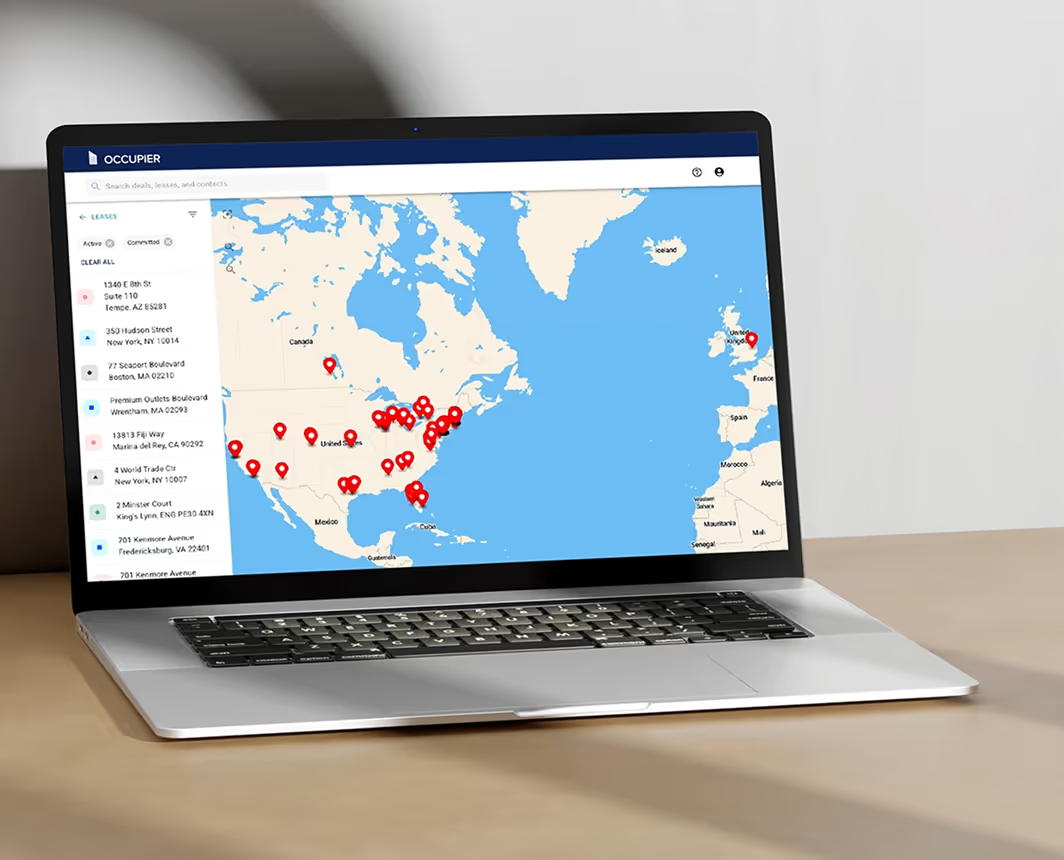
Occupier closes that gap by giving both teams a single source of lease data. Real estate manages the lease terms directly; finance’s ASC 842 calculations, journal entries, and disclosures pull from that same record instead of a separate export. One platform. Two teams. Zero compromise.
See how Occupier keeps lessee accounting and lease management in sync →
Lessee vs. Lessor FAQs
Who is the lessor and who is the lessee? The lessor is the party who owns an asset and leases it out. The lessee is the party who pays to use that asset without owning it. In a commercial real estate lease, the lessor is the landlord and the lessee is the tenant.
Is the lessor the landlord? Yes, in a real estate context. “Lessor” is the formal, legal term used in the lease agreement and financial statements; “landlord” is the everyday equivalent.
Is the lessee the buyer or seller? Neither. The lessee is renting or leasing the asset from the lessor and does not own it, regardless of how the transaction is otherwise structured.
What does “lessor” mean? A lessor is the owner of a property or asset who leases it to another party (the lessee) in exchange for regular payments, while retaining ownership.
What is the difference between a lessor and a lessee? The lessor owns the asset and grants the right to use it. The lessee pays for that right without taking on ownership. The distinction drives who’s responsible for what, and how each side accounts for the lease.
What is a lessor in real estate? In real estate, the lessor is the property owner, the landlord, who leases space to a tenant (the lessee) under a lease agreement.
Is a lessor the same as an owner? Not always. A lessor is the party with the legal right to lease out the asset, which is usually the owner, but it can also be another party (such as a master tenant subleasing space) who holds a legal right to lease it out.
What’s the difference between a renter and a lessee? They mean essentially the same thing. “Lessee” is the formal term used in legal and financial contexts and applies to both real estate and equipment leases, while “renter” and “tenant” are more casual terms typically used for residential property.
How does lessee accounting differ from lessor accounting under ASC 842? Lessees record a right-of-use asset and a lease liability on the balance sheet. Lessors classify the lease as operating, sales-type, or direct financing, and that classification determines whether they keep the underlying asset on their books or derecognize it in favor of a net investment in the lease.
What types of leases can a lessor have under ASC 842? Three: operating, sales-type, and direct financing. Lessors don’t use the “finance lease” classification; that term applies only to lessees.

Lease management that works for real estate and finance
15,000 sq ft
90 days notice
March 2026
Action required