What Is a Ground Lease? A Guide for Commercial Tenants
What is the main purpose of a ground lease?
A ground lease allows a tenant to use and develop land without purchasing it. The landowner retains ownership while receiving rental income, and the tenant obtains long-term development and occupancy rights.
A ground lease is a long-term commercial lease agreement that allows a tenant to use and develop land without purchasing it. The landowner retains ownership of the property, while the tenant typically constructs, operates, and maintains buildings or other improvements during the lease term. Ground leases commonly last 50 to 99 years, although shorter arrangements are possible.
For commercial tenants, ground leases offer access to valuable locations without the upfront cost of buying land. Retail chains, restaurants, developers, and other businesses use these agreements to establish operations while preserving capital for construction and expansion.
However, a ground lease also creates long-term financial obligations. Tenants may be responsible for construction, property taxes, insurance, maintenance, and rent increases over several decades. Understanding these commitments is essential before signing an agreement that could extend well beyond the company's current business plans.
What Is a Ground Lease in Commercial Real Estate?
A ground lease, also called a land lease, is an agreement in which a property owner leases land to a tenant for an extended period. The tenant receives the right to use and develop the land according to the lease terms, while the landlord retains ownership.
Unlike a traditional commercial lease, where a business rents an existing building or retail space, a ground lease often involves constructing a new facility on undeveloped land.
For example, a restaurant chain might lease a vacant lot at a busy intersection for 75 years. The company constructs a restaurant, operates the business, and pays rent to the landowner throughout the agreement.
The tenant generally controls the improvements during the lease term, subject to contractual restrictions. When the agreement expires, the buildings and improvements typically transfer to the landowner, depending on the lease provisions.
This structure allows businesses to establish long-term operations without purchasing the underlying land.
How Does a Ground Lease Work?
A ground lease separates ownership of the land from the tenant's right to use and develop it.
The landlord provides access to the property, while the tenant typically assumes responsibility for construction, financing, maintenance, and ongoing operating expenses.
The process generally involves four stages:
- Lease negotiation: The landlord and tenant agree on the lease duration, rent, permitted development, financing rights, and contractual obligations.
- Property development: The tenant obtains approvals, arranges financing, and constructs buildings or improvements.
- Ongoing operations: The tenant uses the property, pays ground rent, and fulfills maintenance, tax, and insurance obligations.
- Lease expiration: The agreement ends, renews, or is renegotiated, with the treatment of improvements determined by the contract.
Ground leases are often structured similarly to triple net leases, where tenants assume responsibility for property taxes, insurance, and maintenance in addition to rent.
However, the two are not interchangeable. A ground lease establishes the tenant's interest in land, while a triple net lease describes how property operating expenses are allocated.
What Are the Two Types of Ground Leases?
Ground leases are commonly classified as subordinated or unsubordinated based on the relationship between the landowner's interest and the tenant's financing.
This distinction matters because tenants often borrow substantial amounts to construct buildings on leased land.
Subordinated Ground Lease
In a subordinated ground lease, the landowner agrees to subordinate its ownership interest to a lender's mortgage or security interest under the financing arrangement.
This can make construction financing easier to obtain because the lender receives stronger collateral protection.
For example, a retailer developing a $5 million facility may secure financing more easily when the landowner agrees to subordinate its interest.
However, this arrangement increases the landlord's risk. If the tenant defaults on the loan, the lender may have foreclosure rights affecting the landowner's interest.
Landlords may negotiate higher rent or additional protections in exchange for accepting that risk.
Unsubordinated Ground Lease
In an unsubordinated ground lease, the landowner does not subordinate its ownership interest to the tenant's lender.
The lender generally relies on the tenant's leasehold interest rather than receiving a mortgage over the landowner's fee interest.
This protects the landlord's ownership position but may make financing more complicated for the tenant.
Lenders may require additional protections, including notice of defaults, opportunities to cure violations, and rights to obtain a replacement lease under specified circumstances.
Tenants should confirm that their financing arrangements are compatible with the ground lease before committing to construction.
What Are the Advantages of a Ground Lease for Tenants?
Ground leases can provide significant benefits for businesses pursuing long-term expansion, particularly when purchasing land requires substantial capital.
Lower Upfront Land Acquisition Costs
The primary advantage is that tenants can access commercial land without paying its full purchase price.
Instead of committing millions of dollars to land acquisition, a business can allocate capital toward construction, equipment, staffing, and operations.
This can be particularly useful for restaurant chains and retailers expanding into expensive commercial markets.
However, tenants must still account for construction expenses, financing costs, and ongoing ground rent.
Access to Desirable Locations
Some landowners are unwilling to sell valuable properties but are open to long-term leasing arrangements.
A ground lease can provide access to locations that might otherwise be unavailable for purchase.
For example, a national retailer may secure a prominent corner site through a ground lease rather than relocating to a less desirable property available for sale.
Greater Control Over Development
Ground lease tenants often have more control over building design and improvements than businesses renting existing commercial space.
They may construct facilities that meet specific operational needs, branding requirements, and customer expectations.
However, development rights remain subject to the lease. Landlord approval may be required for construction plans, alterations, and changes in permitted use.
Long-Term Occupancy Stability
Long lease terms can make substantial investments in property improvements more practical.
A business constructing an expensive facility needs sufficient time to recover its investment and generate returns.
A 50-year or 75-year agreement may provide that opportunity, provided the rent structure and operating obligations remain financially manageable.
What Are the Disadvantages of a Ground Lease?
Ground leases also create financial and operational risks that tenants should evaluate carefully.
No ownership of the land: The tenant does not acquire the underlying property, even after investing heavily in construction. At expiration, improvements may transfer to the landowner without compensation.
Significant development costs: Tenants frequently assume responsibility for construction, site preparation, utilities, insurance, taxes, and major repairs.
Long-term rent commitments: Ground leases often include scheduled rent increases or periodic market adjustments. Payments that appear affordable initially can become substantially more expensive over time.
Limited flexibility: Restrictions on assignments, subleasing, redevelopment, or permitted use may complicate future business changes.
These risks make the agreement's specific provisions more important than its advertised lease duration or initial rental rate.
What Should Tenants Review Before Signing a Ground Lease?
Ground leases involve greater complexity than many conventional commercial leases because they combine long-term occupancy with development and financing obligations.
The following provisions deserve particular attention.
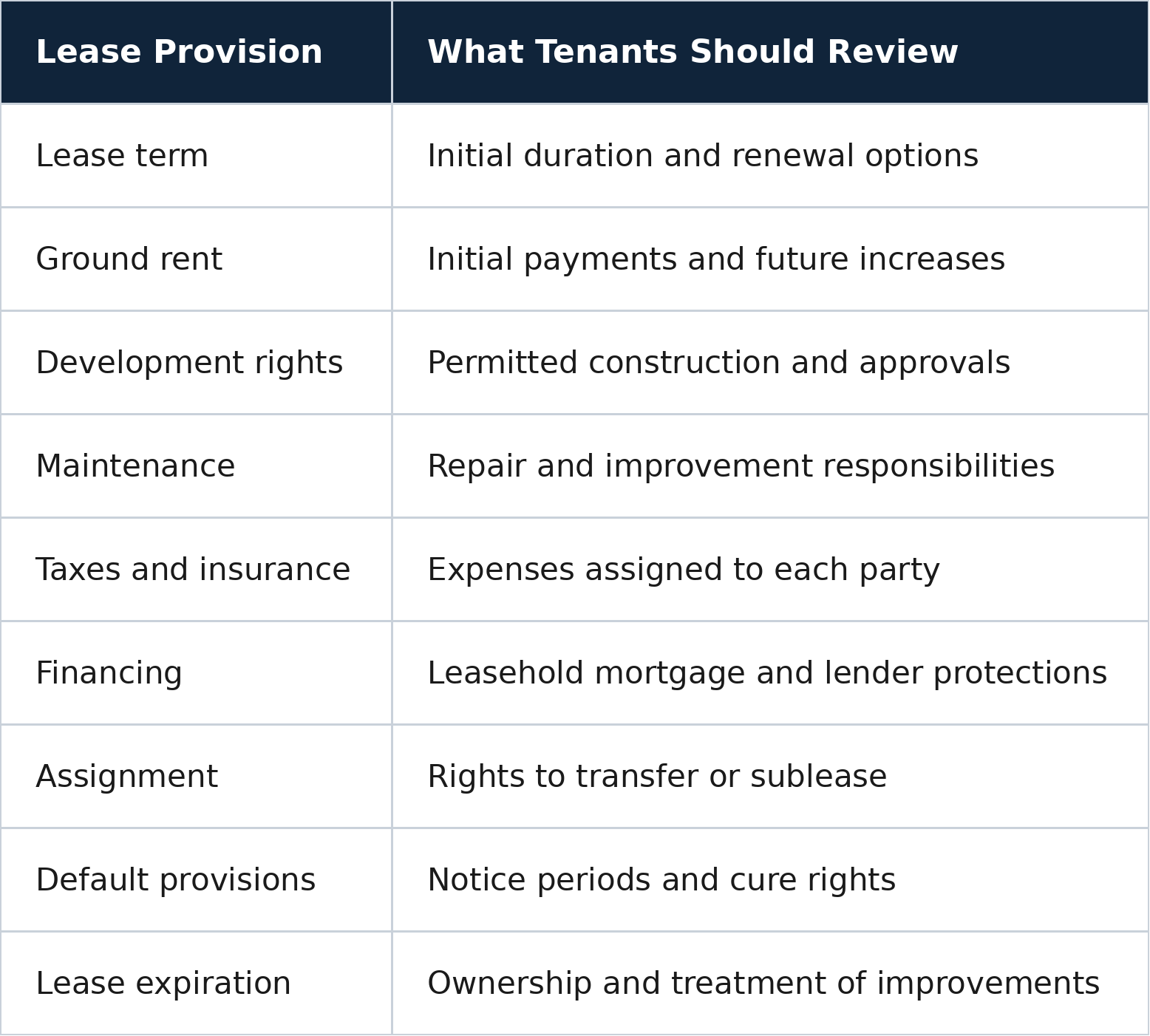
Rent Escalation Clauses
Because ground leases can last several decades, rent escalation provisions significantly affect total occupancy costs.
Some agreements use fixed increases, while others adjust rent periodically based on the Consumer Price Index (CPI) or property valuations.
For example, a ground lease with annual rent of $120,000 and a 3% annual increase would reach approximately $161,270 in year eleven.
Tenants should model these increases across the full lease term rather than focusing only on the initial payment.
Renewal Options and Critical Dates
Renewal rights are especially important when tenants have invested heavily in property development.
An agreement may provide an option to extend the lease, but exercising it usually requires compliance with specific notice requirements.
Missing a renewal deadline could threaten the tenant's continued use of the property.
Effective critical date management helps real estate teams track renewal notices, rent adjustments, and contractual deadlines before they become urgent.
Assignment and Financing Rights
Tenants should confirm whether they can assign the lease, obtain leasehold financing, or transfer their interest as part of a business sale.
Restrictions on these activities may affect expansion, restructuring, or exit plans.
Lenders may also require protections that are not included in the landlord's initial proposal.
Because these terms can be spread across lengthy agreements, lease abstraction can help teams organize financing provisions, renewal rights, rent schedules, and other important obligations into accessible records.
Ground Lease Example: A Restaurant Development
Consider a restaurant company planning to develop a freestanding location on a commercial lot.
The company can either purchase the land or enter a 50-year ground lease.
Assume the following terms:
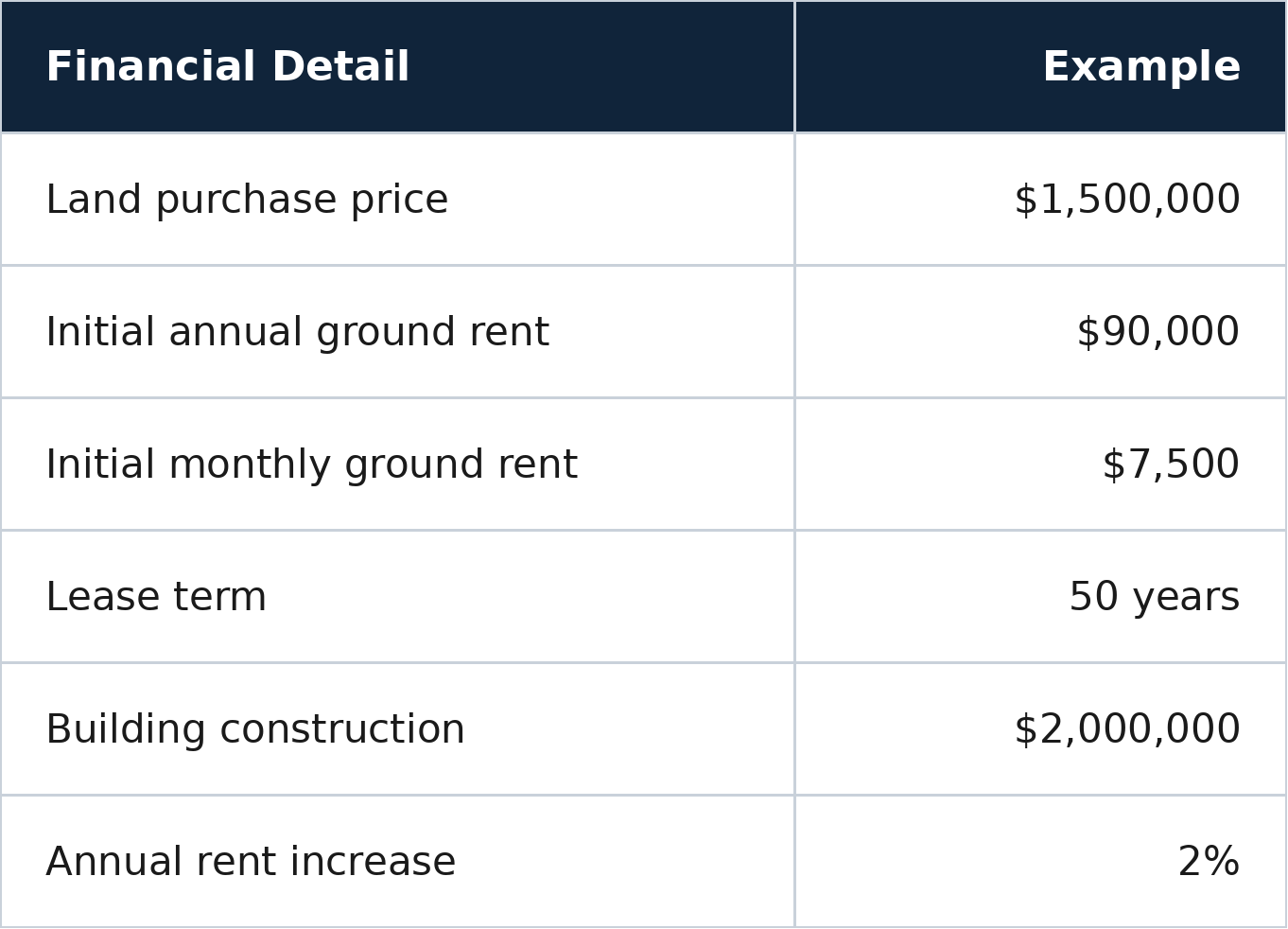
By entering the ground lease, the restaurant avoids the initial $1.5 million land purchase.
However, it still spends $2 million constructing the building and must pay ground rent throughout the agreement.
With a 2% annual escalation, annual ground rent would increase to approximately $109,709 in year eleven.
Over 50 years, total nominal ground rent would reach approximately $7.61 million, excluding taxes, insurance, maintenance, and other costs.
That does not automatically make leasing more expensive than purchasing.
A proper comparison also considers financing costs, the time value of money, land appreciation, ownership benefits, and what happens to the building when the lease ends.
The restaurant must determine whether the location can generate sufficient returns to recover its development investment while meeting these long-term obligations.
This illustrates why ground lease decisions require comprehensive financial modeling rather than simply comparing initial purchase and rental costs.
What Happens When a Ground Lease Expires?
When a ground lease expires, the tenant's contractual right to use the property generally ends unless the agreement is renewed or extended.
In many arrangements, buildings and other improvements become the landowner's property without additional compensation.
However, the agreement may establish different terms, including negotiated extensions, compensation for improvements, or requirements to remove certain structures.
These provisions should be understood before construction begins.
A company investing several million dollars in a facility needs a realistic plan for recovering that investment before its leasehold rights expire.
The remaining lease term can also affect financing availability, the value of the tenant's leasehold interest, and the feasibility of selling or transferring the business.
How Are Ground Leases Accounted for Under ASC 842?
Ground leases generally fall within the scope of ASC 842 for companies reporting under US GAAP.
Under this standard, lessees typically recognize a right-of-use (ROU) asset and a corresponding lease liability for qualifying ground leases.
The initial lease liability is generally measured using the present value of applicable lease payments and the appropriate discount rate.
The accounting lease term also considers renewal and termination options when the relevant reasonably-certain criteria are met.
Occupier's ASC 842 lease accounting guide explains how lease classification, payment schedules, and contractual options affect financial reporting.
Ground lease accounting can become more complex when agreements include variable rent adjustments, renewal options, construction obligations, and separately accounted-for improvements.
The accounting treatment of tenant-constructed buildings also requires consideration of the specific ownership and contractual arrangements.
Real estate and finance teams should coordinate these assessments to ensure changes in lease terms are reflected accurately in financial reporting.
Why Ground Lease Management Matters for Real Estate and Finance Teams
Ground leases sit at the intersection of real estate operations and financial reporting.
Real estate teams manage development rights, renewal options, and landlord obligations. Finance teams monitor rent escalations, accounting schedules, and long-term commitments. Legal teams handle financing provisions, assignments, and amendments.
When these records are maintained separately, important information can become difficult to locate or verify.
For businesses managing multiple properties, the challenge increases as rent adjustments, renewal decisions, and financing requirements occur across different locations.
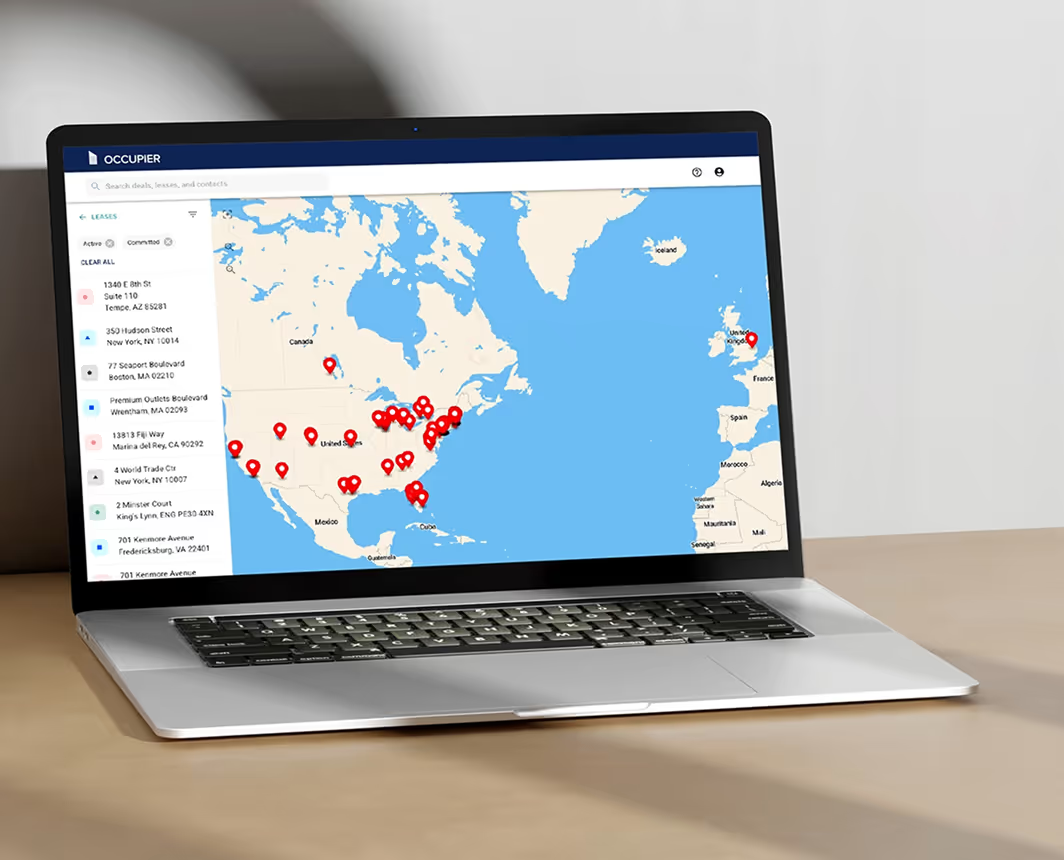
Occupier's lease administration software centralizes lease documents, rent schedules, critical dates, and contractual responsibilities so real estate teams can manage long-term obligations consistently.
Its lease accounting software connects that lease information with ASC 842 calculations and financial reporting, giving finance teams access to the same underlying records.
For ground leases extending over several decades, accurate information matters as much as the original negotiation. Keeping real estate and finance aligned helps businesses manage financial exposure, protect contractual rights, and make informed portfolio decisions.
Ground Lease FAQs
What is the main purpose of a ground lease?
A ground lease allows a tenant to use and develop land without purchasing it. The landowner retains ownership while receiving rental income, and the tenant obtains long-term development and occupancy rights.
How long does a ground lease typically last?
Ground leases commonly last between 50 and 99 years, although terms can vary depending on the agreement and applicable law. Longer terms are often used when tenants make substantial construction investments.
Who owns the building in a ground lease?
The tenant may hold ownership or other rights to buildings during the lease term, depending on the agreement and applicable law. At expiration, improvements commonly transfer to the landowner unless the lease provides otherwise.
What is the difference between a ground lease and a triple net lease?
A ground lease involves renting land, often for development. A triple net lease allocates responsibility for property taxes, insurance, and maintenance to the tenant. A ground lease can also use a triple net structure.
Can a tenant get financing for a ground lease property?
Yes. Tenants may obtain leasehold financing using their leasehold interest as collateral. Lenders typically review the remaining lease term, assignment rights, default protections, and other contractual provisions.
What happens if a ground lease tenant defaults?
The landlord may pursue contractual remedies, including termination, depending on the agreement and applicable law. Leasehold lenders may also have notice and cure rights intended to protect their financing interests.
Are ground lease payments tax deductible?
Ground rent may qualify as a deductible business expense, but treatment depends on the agreement, applicable tax law, and the tenant's circumstances. Businesses should consult their tax advisors.
Is a ground lease better than buying commercial property?
It depends on the tenant's financial position, development plans, and long-term objectives. Ground leasing can preserve upfront capital, while purchasing land provides ownership and potential appreciation. The best choice requires comparing total costs, financing, flexibility, and residual value.


Lease management that works for real estate and finance
15,000 sq ft
90 days notice
March 2026
Action required