Commercial Lease Agreement: Key Clauses & Tenant Checklist

What is the purpose of a commercial lease agreement?
A commercial lease agreement establishes the legal and financial terms under which a business may occupy a commercial property. It defines the rights and obligations of the tenant and landlord.
A commercial lease agreement is a legally binding contract between a landlord and a business tenant that establishes the terms for occupying and using commercial property. It defines rental payments, responsibilities for maintenance and repairs, permitted activities, lease duration, and the rights of both parties.
Whether a business leases office space, a retail storefront, a restaurant, or an industrial facility, the agreement can create financial and operational commitments lasting several years.
Unlike many residential rental arrangements, commercial leases are frequently customized to the property and the tenant's business requirements. As a result, two properties with similar advertised rents may have significantly different contractual obligations.
Understanding the agreement before signing helps tenants identify unexpected expenses, avoid restrictive provisions, and protect their ability to operate or adapt their business.
What Is a Commercial Lease Agreement?
A commercial lease agreement establishes the contractual relationship between a property owner and a business occupying the premises.
It identifies the parties, describes the property, establishes the rental terms, and specifies what each party must do throughout the lease.
The agreement also governs what happens when circumstances change, such as a missed payment, building damage, business relocation, or lease expiration.
For example, a retailer signing a five-year lease may agree to pay monthly base rent, contribute toward shared operating expenses, maintain certain building systems, and provide written notice before exercising a renewal option.
These requirements become enforceable contractual obligations, subject to the agreement and applicable law.
A commercial lease is more than a document authorizing occupancy. It determines how the business can use the property, what financial risks it accepts, and which options remain available during the tenancy.
What Information Should a Commercial Lease Agreement Include?
Before reviewing detailed clauses, confirm that the document accurately identifies the property, the parties, and the basic transaction.
Mistakes in these details can create problems with payment obligations, notices, enforcement, and future amendments.
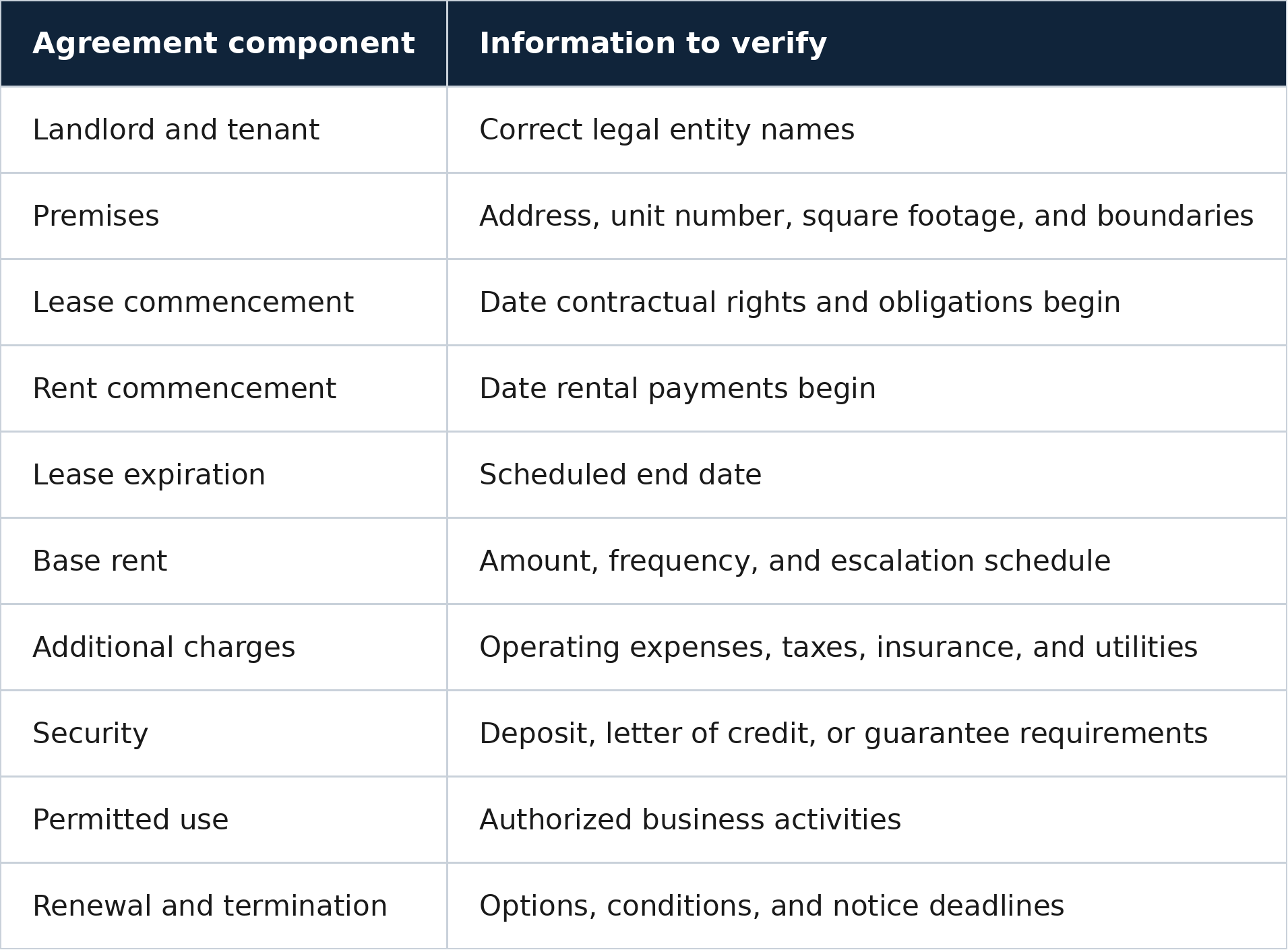
The premises description deserves particular attention.
For example, a restaurant may expect access to outdoor seating, storage areas, or designated parking spaces. If those areas are not included in the lease or another binding document, the tenant may not have the rights it anticipated.
Any floor plans, exhibits, or supplemental agreements should be reviewed alongside the main contract.
Understanding Rent and Payment Clauses
The rent section establishes how much the tenant must pay and when those payments become due.
Commercial leases may include fixed base rent, scheduled increases, additional rent, percentage-based payments, or other charges.
The exact combination depends on the agreement.
Base Rent and Escalations
Base rent is the primary payment for occupying the premises.
The agreement should specify whether rent is quoted monthly, annually, or per square foot.
For example, a 3,000-square-foot office leased at $30 per square foot annually has a base rental obligation of $90,000 per year, or $7,500 per month.
However, annual escalations can increase the amount throughout the lease term.
Tenants should verify the escalation dates, calculation method, and whether increases are fixed or connected to an index.
Additional Rent and Operating Expenses
A lease may require payments beyond base rent.
These can include property taxes, building insurance, maintenance expenses, utilities, administrative charges, and other agreed costs.
The agreement should clearly explain which expenses are recoverable and how the tenant's share is calculated.
For example, a shopping center tenant may pay a proportionate share of expenses associated with common areas.
Tenants should also understand whether the landlord collects estimated monthly charges and later reconciles them against actual expenses.
Occupier's guide to commercial rent structures explains the different ways these costs may be allocated.
This article focuses on what the signed agreement must communicate, rather than comparing every rental structure.
Lease Commencement, Expiration, and Renewal Rights
Commercial lease agreements often contain several important dates that serve different purposes.
The execution date is when the parties sign the agreement. The commencement date establishes when the lease term begins under its provisions, while the rent commencement date determines when rental payments start.
These dates may not be identical.
For example, a tenant may receive possession in January to complete improvements but begin paying base rent in March.
The agreement should state how these dates are determined and what happens if the premises are not delivered as expected.
Renewal Options
A renewal option may give the tenant the right to extend occupancy beyond the initial term.
The clause should explain the required notice period, conditions for exercising the option, and method for determining renewal rent.
A tenant with a five-year lease might need to submit written renewal notice nine months before expiration.
Missing that deadline could affect the tenant's ability to remain in the property, depending on the contract and applicable law.
Renewal deadlines should therefore be recorded and monitored well before they approach.
Holdover Provisions
A holdover occurs when the tenant remains in the premises after the lease expires without an effective renewal or replacement agreement.
Some contracts impose increased rent during holdover periods, while others establish different occupancy conditions.
Remaining in the property does not automatically create a new long-term lease.
Tenants should confirm the consequences of holding over, including possible financial exposure and landlord remedies.
Permitted Use and Business Restrictions
The permitted use clause defines which activities may occur at the property.
This provision is particularly important for businesses with specialized operational requirements.
A restaurant may need permission for food preparation, alcohol service, delivery operations, and outdoor seating. A healthcare tenant may require authorization for specific clinical activities.
The permitted use should be broad enough to support the business's reasonable operations without creating unnecessary limitations.
Other restrictions may address operating hours, signage, noise, hazardous materials, or changes in business activities.
Retail tenants should also review any exclusivity protections or restrictions affecting competition within the property.
Before execution, confirm that the intended use is permitted by the lease and that the property can satisfy applicable zoning, licensing, and building requirements.
Maintenance, Repairs, and Property Improvements
Commercial lease agreements should clearly divide maintenance and repair responsibilities between the landlord and tenant.
The allocation can affect operating costs long after the original lease is signed.
Routine Maintenance vs. Major Repairs
The agreement may assign routine interior maintenance to the tenant while keeping certain structural responsibilities with the landlord.
However, these arrangements vary substantially.
Tenants should identify responsibility for HVAC equipment, roofing, plumbing, electrical systems, parking areas, and building structures.
The distinction between repairing and replacing equipment is especially important.
An obligation to maintain an HVAC system may have a different financial impact from responsibility for replacing the entire system.
Alterations and Tenant Improvements
Businesses often need to modify commercial space before opening.
The lease should address landlord approval, construction standards, contractor requirements, permits, and responsibility for costs.
If the landlord provides a tenant improvement allowance, the agreement should specify the amount, eligible expenses, and reimbursement process.
It should also clarify ownership of improvements and whether the tenant must remove alterations at expiration.
These provisions are particularly relevant for restaurants, medical practices, and retailers investing substantial amounts in specialized interiors.
Security Deposits, Guarantees, and Insurance
Commercial landlords may request financial security to protect against unpaid rent or other tenant defaults.
The agreement should specify the form of security, circumstances in which it may be used, and conditions for its return or release.
Some landlords request personal or corporate guarantees, particularly when the tenant has a limited operating history.
These guarantees may create obligations extending beyond the tenant entity.
Review the amount, duration, and conditions under which a guarantor's responsibility ends.
Insurance clauses also require attention.
They may establish liability coverage limits, property coverage requirements, additional insured obligations, and procedures for providing evidence of insurance.
Indemnification provisions allocate certain risks between the parties. Their effect depends on the wording and applicable law.
Tenants should have legal and insurance professionals review these clauses instead of assuming they follow a standard format.
Assignment, Subleasing, and Changes in Business Needs
Business requirements can change significantly during a multi-year lease.
A company might relocate, consolidate locations, sell its operations, or reduce its occupied space.
Assignment and subleasing clauses determine whether and how the tenant can transfer its interest or allow another business to occupy the premises.
Many leases require landlord consent before a transfer.
The agreement may also specify consent procedures, transfer fees, financial requirements, and circumstances where approval is not needed.
Tenants should determine whether they remain liable after an assignment or sublease.
Transferring occupancy does not necessarily eliminate responsibility under the original lease.
For companies anticipating restructuring or expansion, these provisions can be important sources of flexibility.
Default, Remedies, and Early Termination
A default clause identifies conduct that may constitute a breach of the agreement.
Examples include failure to pay rent, unauthorized use, insurance violations, or failure to perform specified obligations.
The lease should explain the consequences of default and whether the tenant receives notice or an opportunity to cure the problem.
Remedies depend on the contract and applicable law.
Early Termination Rights
Some agreements provide negotiated rights to terminate before the scheduled expiration date.
These rights may require advance notice, a termination fee, repayment of certain concessions, or satisfaction of other conditions.
For example, a tenant may negotiate the ability to terminate after the third year of a seven-year agreement by providing nine months' notice and paying an agreed fee.
Without an applicable contractual or legal basis, leaving the premises early may not eliminate future obligations.
Tenants should understand the consequences of termination before signing, rather than investigating their options only when circumstances change.
Commercial Lease Agreement Example: Evaluating Total Cost
Consider a business reviewing a five-year commercial office lease.
The proposed agreement includes the following terms:
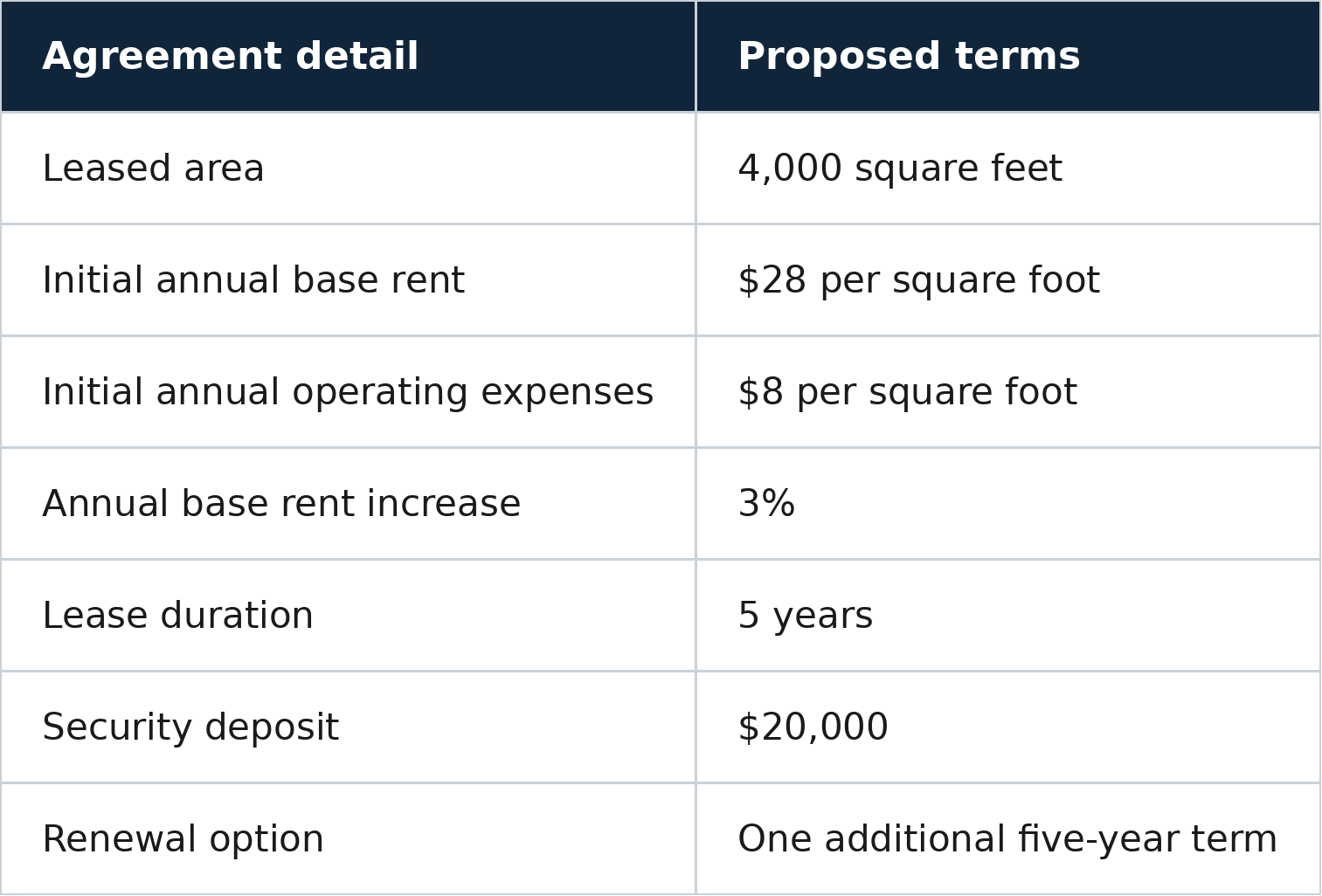
The first year's base rent is:
4,000 × $28 = $112,000
Estimated annual operating expenses are:
4,000 × $8 = $32,000
The estimated first-year occupancy cost is therefore $144,000, excluding other separately payable amounts.
However, the agreement also includes annual base rent increases and potentially changing operating expenses.
The tenant needs to model those amounts over the full term, not just evaluate the starting monthly rent.
The renewal option must also be reviewed to determine how rent will be calculated and when notice is required.
This example illustrates how several contract provisions affect one occupancy decision.
Commercial Lease Agreement Checklist Before Signing
A structured document review can help ensure that important provisions have not been overlooked.
Use this checklist alongside a review by qualified legal and real estate professionals.
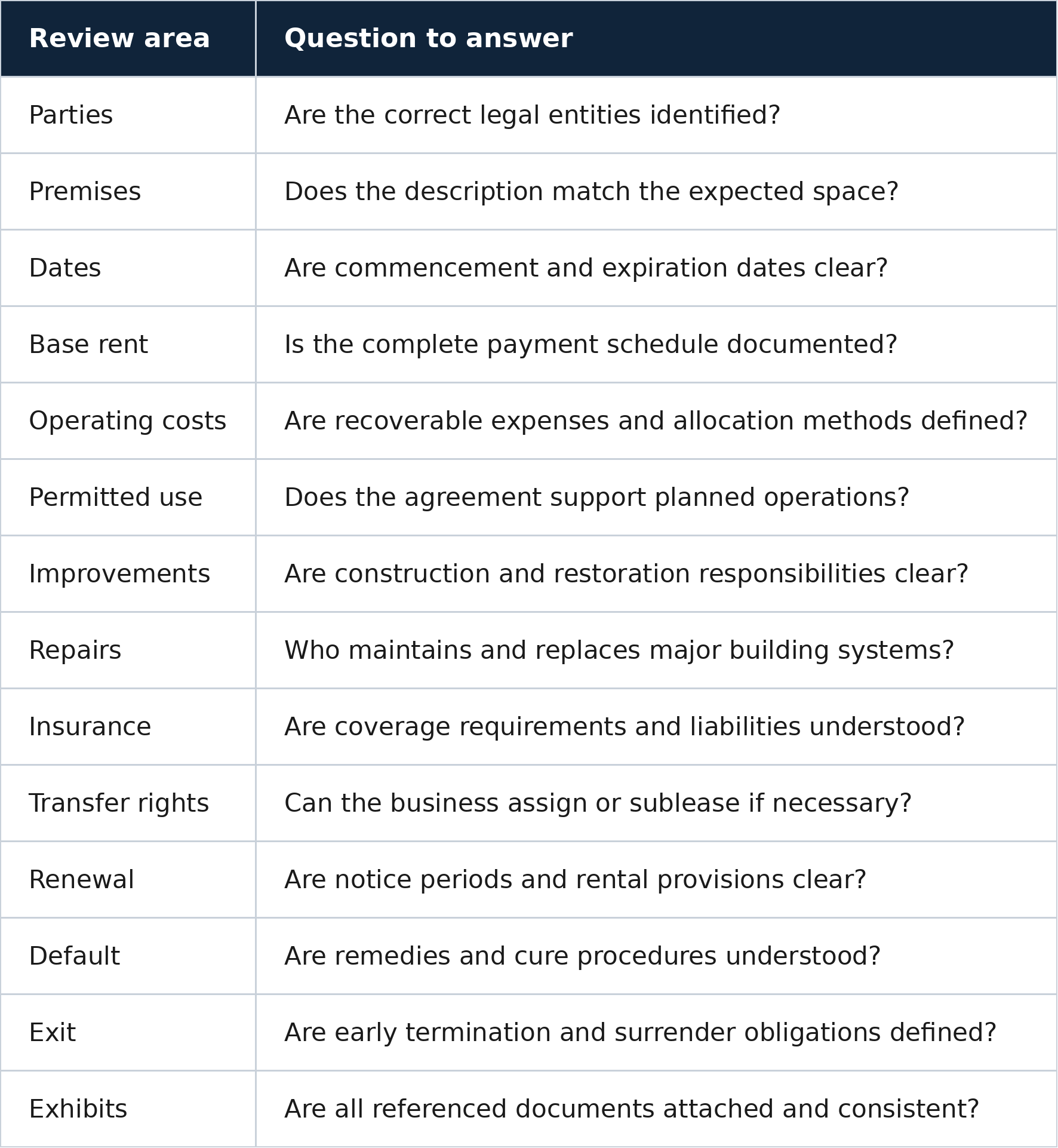
Before signing, compare the final contract against previously agreed business terms.
A concession included in a proposal or letter of intent may not automatically appear in the final lease.
Occupier's lease negotiation guide covers strategies for addressing unfavorable provisions before execution.
The agreement review should confirm that negotiated changes appear accurately in the binding document.
What Happens After the Lease Is Signed?
Execution is not the end of a commercial lease's administrative requirements.
The tenant must track payments, critical dates, documentation, and contractual obligations throughout the term.
Lease commencement dates, rent escalations, insurance renewals, and option notice periods should be recorded in a reliable system.
Real estate and finance teams also need access to executed amendments and updated payment schedules.
For organizations managing multiple locations, inconsistent recordkeeping can make it difficult to determine which obligations apply to individual properties.
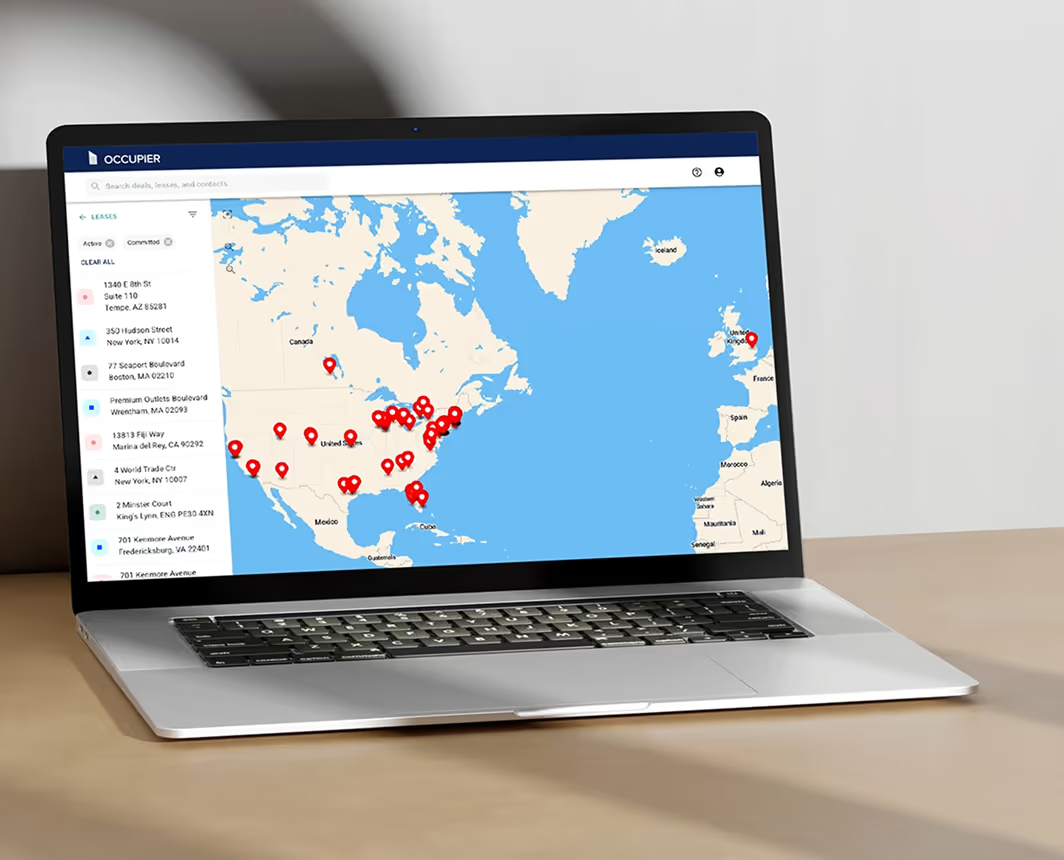
A centralized lease inventory helps teams maintain consistent information and respond to changes more effectively.
Occupier's lease administration software helps commercial tenants organize agreements, monitor critical dates, and manage lease-related obligations across their portfolios.
The appropriate process should ensure that the signed agreement remains accessible and its important requirements are translated into day-to-day activities.
Frequently Asked Questions About Commercial Lease Agreements
What is the purpose of a commercial lease agreement?
A commercial lease agreement establishes the legal and financial terms under which a business may occupy a commercial property. It defines the rights and obligations of the tenant and landlord.
Is a commercial lease agreement legally binding?
Generally, yes, when the agreement is validly executed and meets applicable legal requirements. The enforceability of specific provisions depends on the contract and governing law.
What is the difference between a commercial and residential lease?
Commercial leases govern property used for business purposes and often involve more customized terms. Residential leases commonly benefit from additional statutory protections that may not apply to commercial transactions.
Can a commercial lease agreement be changed after signing?
Yes, when the parties properly agree to an amendment or another applicable contractual mechanism permits the change. Amendments should be documented and reviewed for their effect on existing obligations.
Who is responsible for repairs under a commercial lease?
Responsibility depends on the agreement. The landlord may handle certain structural repairs while the tenant maintains interior areas or equipment. The lease should clearly define each party's obligations.
Do commercial lease agreements require a security deposit?
Not always. Security requirements vary by landlord, tenant, property, and negotiated terms. Some agreements use deposits, letters of credit, guarantees, or other forms of security.
Should a lawyer review a commercial lease agreement?
Legal review is strongly recommended because commercial leases can create substantial and long-term obligations. An attorney familiar with the applicable jurisdiction can help evaluate enforceability, liability, and unfavorable provisions.



Lease management that works for real estate and finance
15,000 sq ft
90 days notice
March 2026
Action required