Deferred Rent for ASC 842: Overview and Examples

Is deferred rent still a liability under ASC 842?
No. Deferred rent is no longer recorded as a separate liability for lessees under ASC 842. Existing deferred rent balances from ASC 840 are incorporated into the ROU asset during transition.
Deferred rent is no longer recorded as a separate liability under ASC 842. Instead, any deferred rent balance carried over from ASC 840 is absorbed into the right-of-use (ROU) asset at transition, while the lease liability is measured separately based on the present value of remaining lease payments.
For finance teams moving from ASC 840 to ASC 842, this is one of the biggest changes in how operating leases appear on the balance sheet. The underlying concept of straight-line lease expense remains, but the accounting moves away from a standalone deferred rent account and into the ROU asset and lease liability.
This guide explains what deferred rent is, how it changes under ASC 842, and what the journal entries look like before and after transition.
What is Deferred Rent?
Deferred rent is the difference between the straight-line rent expense recognized for an operating lease and the actual cash rent paid during the same period.
It commonly arises when a lease includes:
- Free rent periods
- Scheduled rent increases
- Step-up rent payments
- Other fixed payment changes over the lease term
Under ASC 840, operating lease expense was generally recognized on a straight-line basis even when cash payments changed from year to year.
For example, assume a three-year lease requires annual payments of:
- Year 1: $10,000
- Year 2: $12,000
- Year 3: $14,000
Total payments are $36,000, so the straight-line annual rent expense is:
$36,000 ÷ 3 = $12,000
In Year 1, the company records $12,000 of rent expense but pays only $10,000 in cash. The $2,000 difference creates a deferred rent liability under ASC 840.
By the end of the lease term, the differences between cash payments and straight-line expense generally reverse, bringing the deferred rent balance back to zero.
Is deferred rent still used under ASC 842?
No. ASC 842 eliminates deferred rent as a separate balance sheet account for lessees.
Operating leases are now recognized on the balance sheet through:
- A lease liability representing the present value of remaining lease payments
- A right-of-use asset representing the lessee's right to use the leased asset
For operating leases, total lease expense is still generally recognized on a straight-line basis. What changes is where the difference between cash paid and lease expense is reflected.
Instead of accumulating in a separate deferred rent account, that difference is reflected through the movement of the lease liability and ROU asset.
You can learn more about how these balances work in Occupier's guide to right-of-use assets.
What is the difference between prepaid rent and deferred rent?
Deferred rent and prepaid rent both involve timing differences, but they represent different situations.
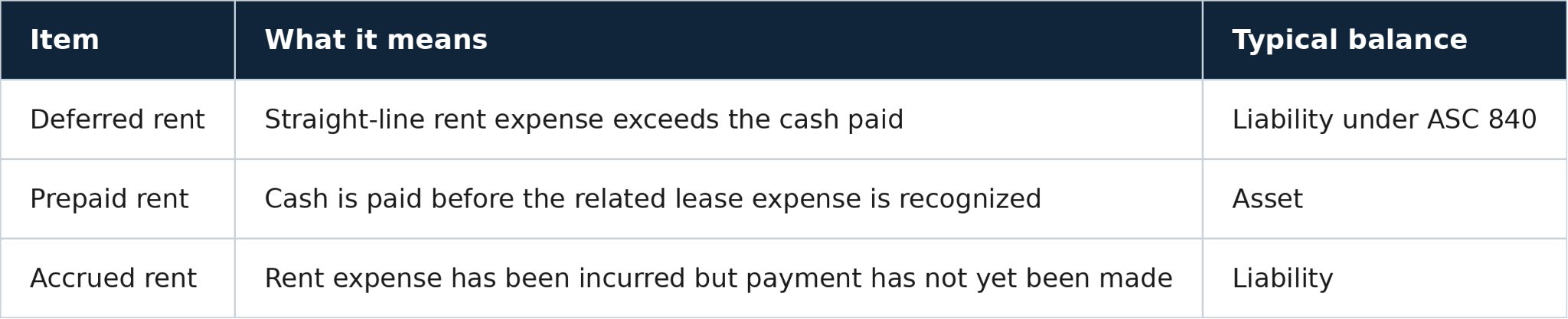
Under ASC 842, deferred and prepaid rent balances can affect the opening ROU asset when transitioning from ASC 840.
They should not be confused with the lease liability itself, which is calculated based on the present value of qualifying future lease payments.
How is deferred rent handled when transitioning from ASC 840 to ASC 842?
At the transition date, an existing deferred rent balance is removed from its standalone account and incorporated into the measurement of the ROU asset.
The process begins by calculating the lease liability based on the present value of the remaining lease payments.
The ROU asset is then generally based on that liability, adjusted for items such as:
- Deferred or accrued rent
- Prepaid rent
- Remaining lease incentives
- Qualifying initial direct costs
- Applicable impairment adjustments
Because of these adjustments, the ROU asset and lease liability may not be equal at transition.
For a typical deferred rent liability, the balance reduces the ROU asset established under ASC 842.
Occupier's help guidance also notes that once a company has transitioned to ASC 842, deferred rent is no longer separately entered into the measurement process because it has already been incorporated into the ROU asset.
What did deferred rent journal entries look like under ASC 840?
Using the same three-year lease example:
- Year 1 payment: $10,000
- Year 2 payment: $12,000
- Year 3 payment: $14,000
- Straight-line lease expense: $12,000 per year
In Year 1 under ASC 840, the entry would be:
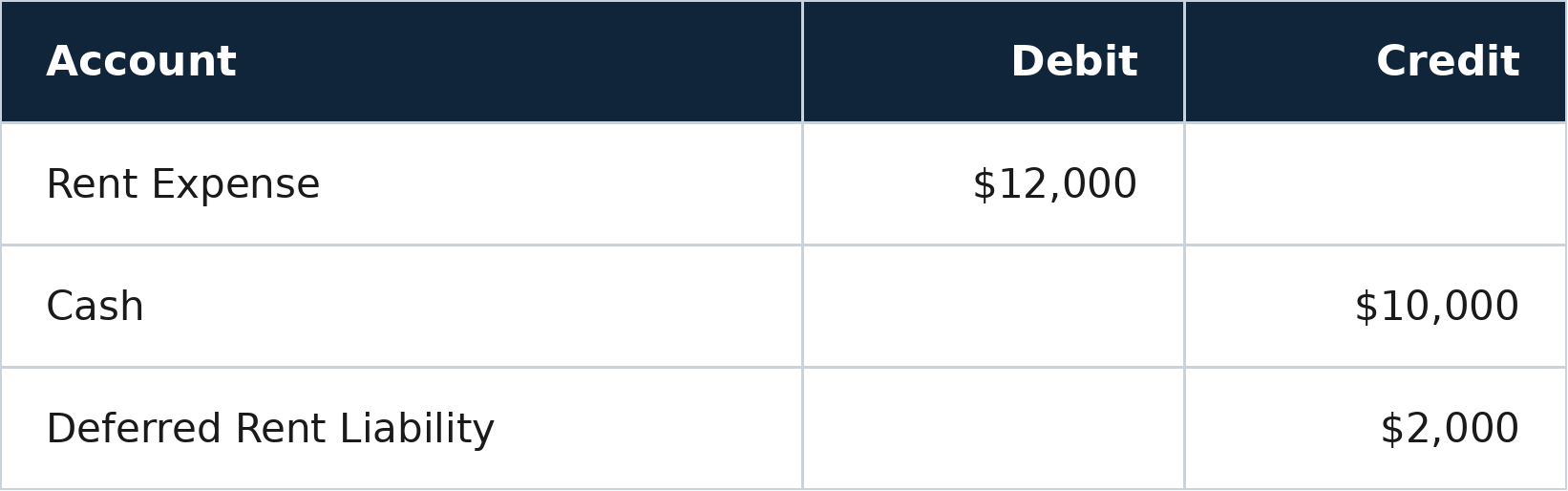
The $2,000 difference between the expense and cash payment is accumulated in the deferred rent account.
In Year 3, the higher cash payment would begin reversing that balance until deferred rent returns to zero.
What do the journal entries look like under ASC 842?
Under ASC 842, there is no separate deferred rent account.
Using the same three-year lease and assuming:
- Payments of $10,000, $12,000, and $14,000
- Payments made at year-end
- Discount rate of 5%
- No prepaid rent, incentives, or initial direct costs
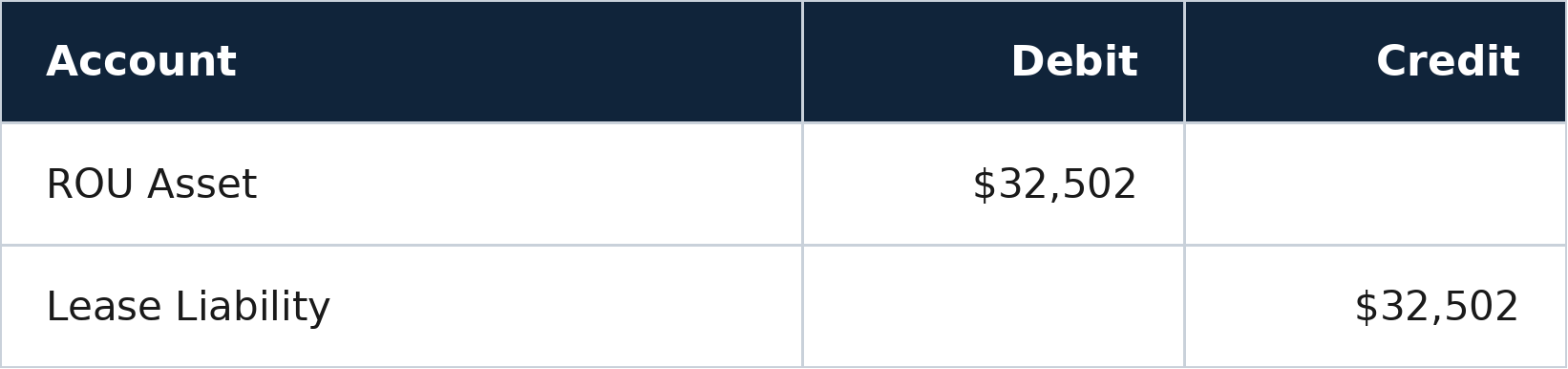
The initial present value of the lease payments is approximately:
$32,502
At commencement, the company records:
For Year 1, the liability accretion is approximately:
$32,502 × 5% = $1,625
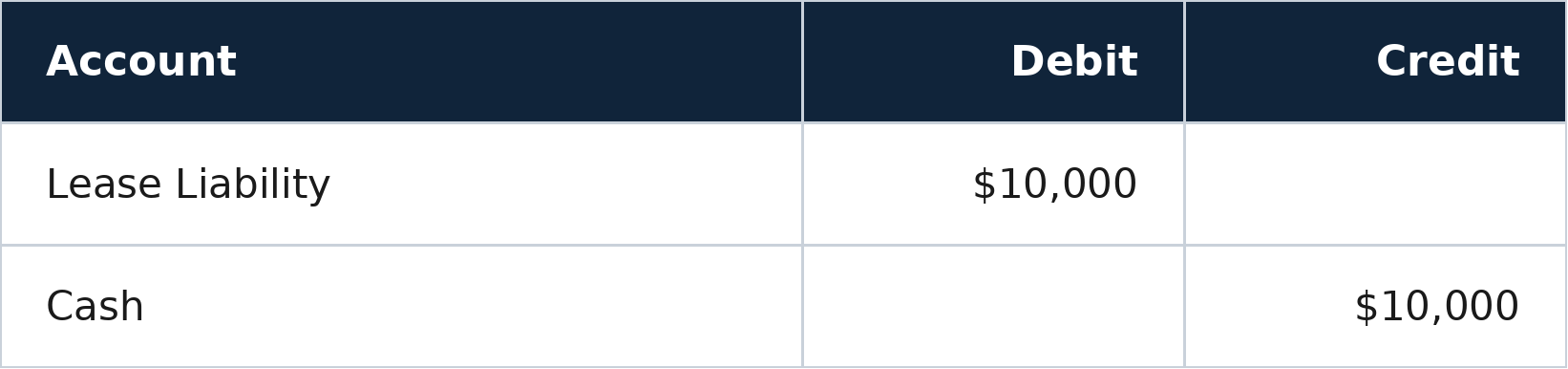
The lease liability is then reduced by the cash payment.
Year 1 lease liability payment
Year 1 lease expense and ROU asset adjustment
The straight-line lease expense remains $12,000.
The ROU asset reduction is approximately:
$12,000 - $1,625 = $10,375
The entry is:
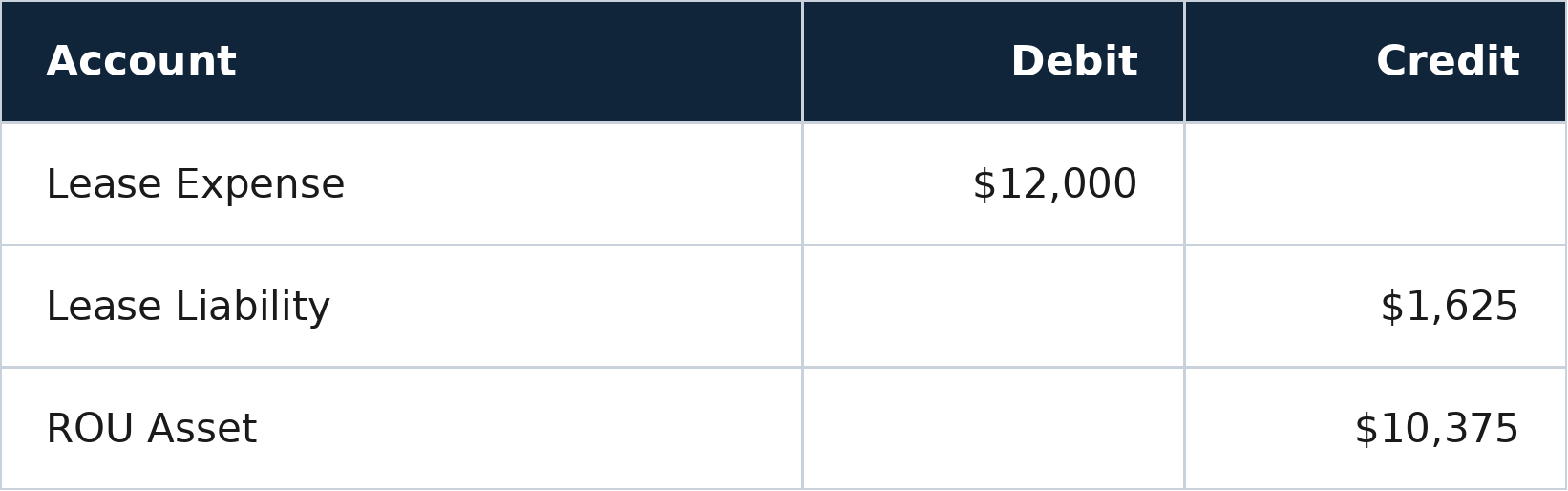
The exact amounts come from the lease amortization schedule.
The important point is that the $2,000 timing difference that would previously have accumulated in deferred rent is no longer sitting in a standalone liability account. Under ASC 842, the same economics are reflected through the lease liability and ROU asset.
For more detail on recurring entries, see Occupier's guide to lease accounting journal entries.
ASC 840 vs. ASC 842 deferred rent accounting
The biggest difference is the balance sheet presentation.
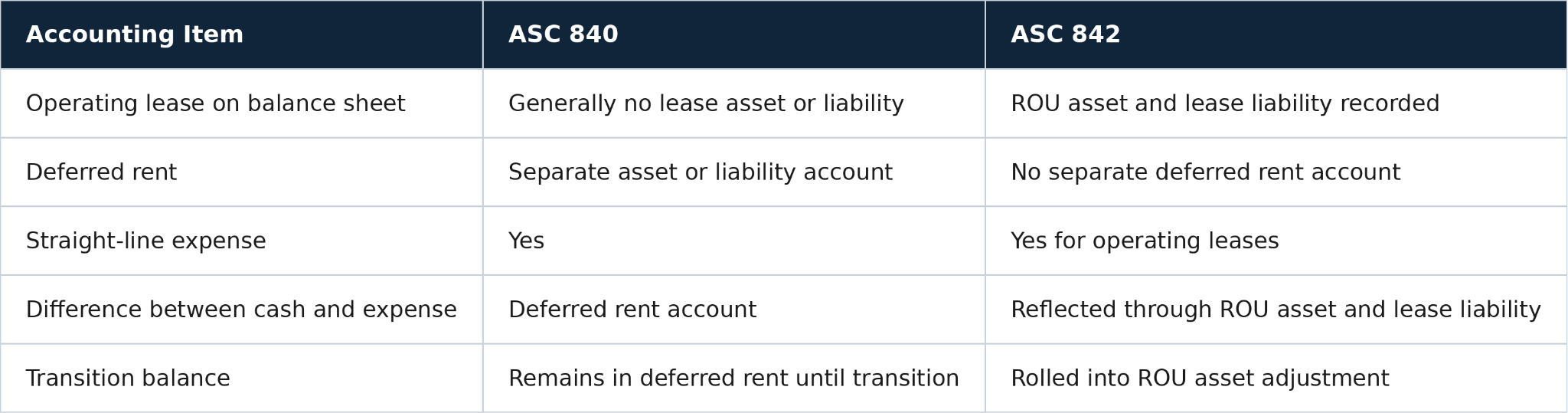
ASC 842 changes the balance sheet mechanics more than the underlying straight-line operating lease expense.
What happens to an existing deferred rent liability at transition?
Assume a company has:
- Lease liability at transition: $1,500,000
- Existing deferred rent liability: $100,000
- No prepaid rent
- No lease incentives
- No initial direct costs
The deferred rent balance reduces the initial ROU asset.
The resulting ROU asset would be:
$1,500,000 - $100,000 = $1,400,000
A simplified transition entry would be:
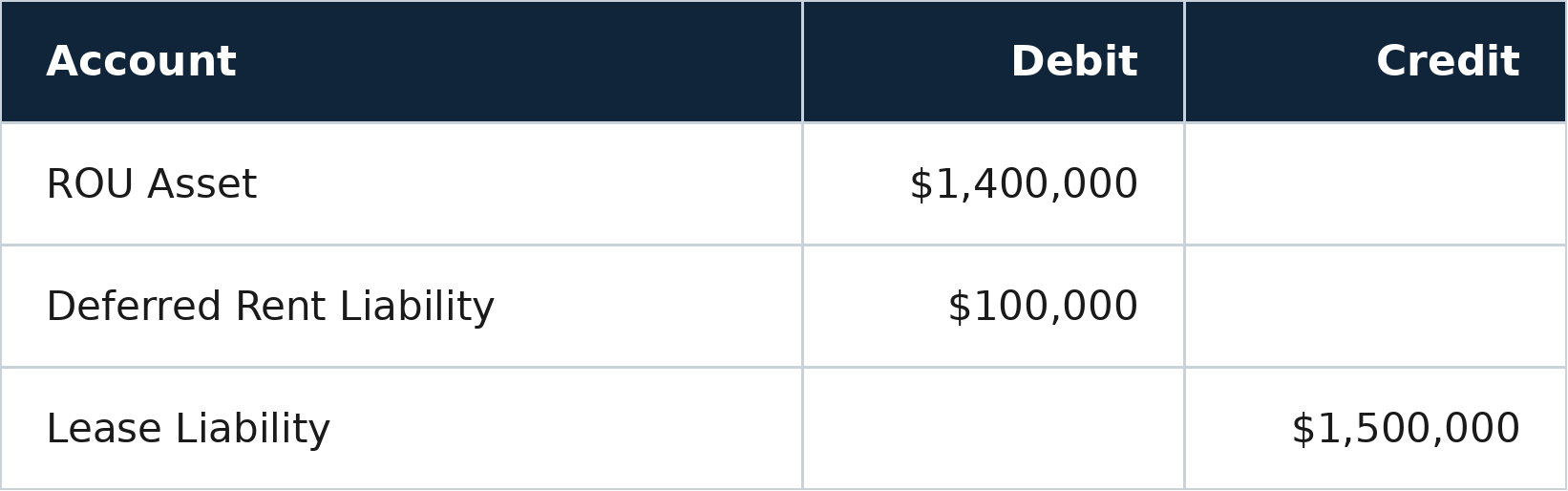
This removes the old deferred rent account and replaces the previous ASC 840 presentation with the ROU asset and lease liability required under ASC 842.
If prior-period deferred rent was not recorded correctly, additional adjustments may be required. Finance teams should work with their auditors or accounting advisors when correcting historical balances.
Does ASC 842 change straight-line lease expense?
For operating leases, ASC 842 generally retains a single lease expense recognized on a straight-line basis over the lease term.
This means ASC 842 does not necessarily change the total lease expense recognized for a typical operating lease compared with ASC 840.
Instead, the major change is how the balance sheet reflects the lease.
Under ASC 840, the timing difference between cash and expense could create deferred rent.
Under ASC 842, operating leases are recognized through the ROU asset and lease liability, while straight-line expense continues to be recognized over the lease term.
Why does deferred rent still matter if the account no longer exists?
Deferred rent remains important because companies transitioning historical leases from ASC 840 need to understand how the existing balance affects the opening ROU asset.
Without the correct transition adjustment, a company could misstate:
- The opening ROU asset
- Lease-related balance sheet amounts
- Subsequent ROU asset amortization
- Lease accounting journal entries
Deferred rent also helps explain why the ROU asset and lease liability may not initially match for an existing lease.
Finance teams should therefore maintain documentation supporting the deferred rent balance used during the transition.
How do lease incentives affect deferred rent and the ROU asset?
Lease incentives can also create differences between the lease liability and ROU asset.
Examples may include landlord payments toward relocation costs or qualifying tenant improvements.
Under ASC 842, lease incentives generally reduce the ROU asset rather than being maintained as a separate deferred balance throughout the lease term.
That means the ROU asset can include several reconciling items at transition, including deferred rent, prepaid rent, initial direct costs, and incentives.
This is why finance teams should reconcile all legacy lease-related accounts before finalizing the ASC 842 opening balances.
How do lease liabilities relate to deferred rent?
The lease liability is not a replacement name for deferred rent.
A lease liability represents the present value of future lease payments required under the lease.
Deferred rent represented the accumulated difference between straight-line lease expense and actual cash payments under ASC 840.
Under ASC 842, the lease liability and ROU asset work together to reflect the lease on the balance sheet, and the net activity between those balances captures timing differences that were previously reflected through deferred rent.
For a deeper explanation, see Occupier's guide to lease liabilities.
What should finance teams remember about deferred rent under ASC 842?
The key point is simple: deferred rent is no longer a separate liability under ASC 842.
For existing ASC 840 operating leases, the accumulated deferred rent balance is incorporated into the ROU asset when the company transitions to ASC 842.
After transition, operating leases are tracked through the lease liability and ROU asset while lease expense generally continues to be recognized on a straight-line basis.
Finance teams should reconcile deferred rent, prepaid rent, incentives, initial direct costs, and lease liabilities carefully so the opening ROU asset is accurate.
How does lease accounting software help manage deferred rent and ASC 842?
ASC 842 introduces more balance sheet calculations than the previous operating lease model.
Managing those calculations manually can become difficult when a company has multiple leases, payment escalations, incentives, modifications, and different transition balances.
Occupier's lease accounting software helps finance teams calculate lease liabilities and ROU assets, maintain amortization schedules, and generate recurring journal entries from the underlying lease data.
This reduces the need to maintain separate spreadsheets for deferred rent and other lease accounting adjustments while helping real estate and finance teams work from the same lease information.
Request a demo to see how Occupier can help simplify lease accounting under ASC 842.
Frequently Asked Questions
Is deferred rent still a liability under ASC 842?
No. Deferred rent is no longer recorded as a separate liability for lessees under ASC 842. Existing deferred rent balances from ASC 840 are incorporated into the ROU asset during transition.
Where does deferred rent go under ASC 842?
An existing deferred rent liability generally reduces the opening ROU asset when a company transitions an operating lease from ASC 840 to ASC 842.
Does ASC 842 still use straight-line rent expense?
Operating leases under ASC 842 generally recognize a single lease expense on a straight-line basis over the lease term.
What is the difference between deferred rent and a lease liability?
Deferred rent represented the accumulated difference between cash payments and straight-line lease expense under ASC 840. A lease liability represents the present value of future lease payments under ASC 842.
How do you record deferred rent when transitioning to ASC 842?
The existing deferred rent account is removed, and the balance is used as an adjustment to the opening ROU asset. The lease liability is separately measured using the present value of remaining lease payments.
Does deferred rent affect the ROU asset?
Yes. An existing deferred rent liability from ASC 840 generally reduces the ROU asset established at transition to ASC 842.



Lease management that works for real estate and finance
15,000 sq ft
90 days notice
March 2026
Action required