Prepaid Rent Under ASC 842

Is prepaid rent an asset or liability?
Prepaid rent is an asset because it represents payment for future use of leased property. Under ASC 842, qualifying prepayments made at or before commencement are generally included in the ROU asset rather than presented separately after commencement.
Yes, prepaid rent is an asset because it represents a payment made for the future use of leased property. However, under ASC 842, prepaid rent is generally included in the right-of-use (ROU) asset once the lease commences, rather than reported as a separate prepaid expense on the balance sheet.
For commercial tenants, the distinction matters because paying rent in advance affects how lease assets and liabilities are calculated. A payment made before commencement increases the initial ROU asset but is not included in the future payments used to measure the initial lease liability.
The accounting becomes more complicated when leases include advance payments, rent escalations, incentives, or changes to payment schedules. Understanding how prepaid rent works under ASC 842 helps finance teams maintain accurate records and avoid double-counting lease payments.
What Is Prepaid Rent?
Prepaid rent is a payment made before the period in which a tenant receives the right to use leased property.
For example, a business may pay its January office rent in December. Because the payment relates to a future period, it represents a prepaid asset when initially recorded before that period begins.
Commercial leases can create prepaid rent in several situations. A tenant may pay the first month's rent before moving in, provide several months of rent upfront, or make a payment before the lease commencement date.
The defining characteristic is timing: cash has been paid before the related lease period.
Under traditional prepaid expense accounting, the business records an asset when payment occurs and subsequently recognizes the expense as the benefit is received.
ASC 842 introduces a different balance sheet treatment for payments associated with recognized leases.
Once the lease commences, qualifying payments made at or before commencement become part of the ROU asset measurement.
Is Prepaid Rent an Asset Under ASC 842?
Yes. Prepaid rent remains an asset under ASC 842, but its presentation changes depending on when the payment is made and whether the lease has commenced.
Before commencement, an advance payment may be temporarily recorded in a prepaid rent account.
At commencement, that amount is generally incorporated into the initial ROU asset rather than continuing as a separate prepaid expense balance.
This distinction is important because ASC 842 requires lessees to recognize two related amounts for most leases:
- Right-of-use asset: Represents the tenant's right to use the leased property during the lease term.
- Lease liability: Represents the present value of qualifying lease payments that remain unpaid at commencement.
Prepaid rent increases the initial ROU asset because the tenant has already made a payment toward obtaining the right to use the property.
However, it does not increase the initial lease liability because that liability is based on payments that remain unpaid.
For a detailed explanation of these calculations, see Occupier's guide to right-of-use assets.
The key distinction is that prepaid rent remains part of the lessee's asset measurement, even though it is generally no longer presented as a standalone prepaid rent asset after commencement.
How Does ASC 842 Change Prepaid Rent Accounting?
Under the previous ASC 840 accounting standard, prepaid rent was commonly recorded separately from other lease balances.
A tenant paying rent in advance would recognize a prepaid asset and reduce that balance as the related rent expense was recognized.
ASC 842 introduced ROU assets and lease liabilities for most operating and finance leases, changing how these payments appear on the balance sheet.
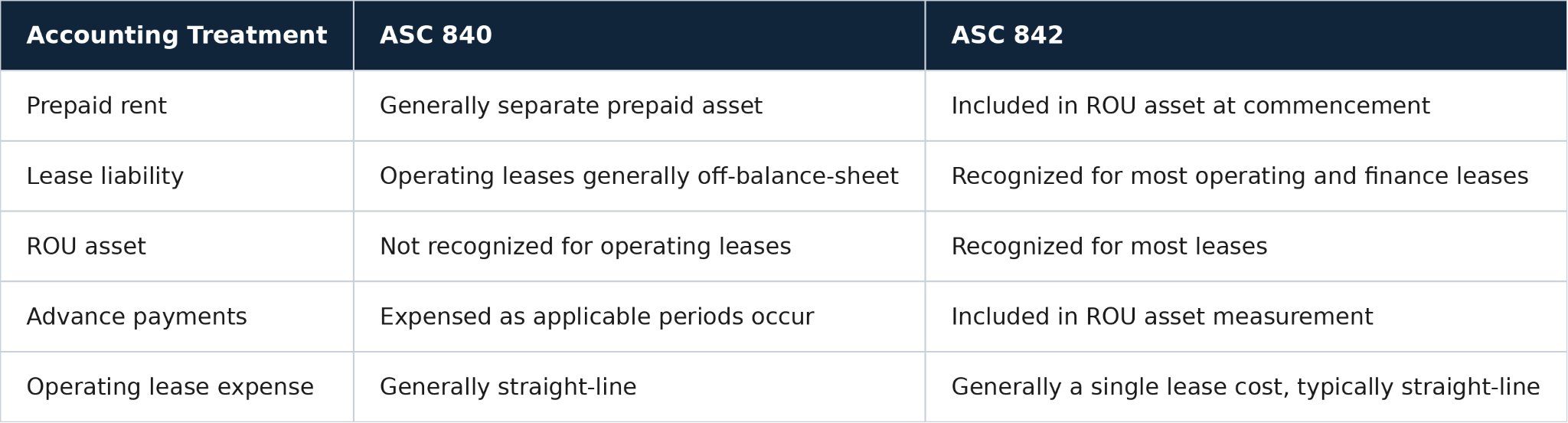
The most significant change is not whether prepaid rent has economic value. It is how that value is represented within the lease accounting model.
For operating leases, ASC 842 generally retains a straight-line expense pattern while recognizing lease assets and liabilities on the balance sheet.
Finance leases follow a different expense recognition pattern, separating interest expense from ROU asset amortization.
Occupier's ASC 842 lease accounting guide explains these differences and how lease classification affects financial reporting.
How Is Prepaid Rent Included in the ROU Asset?
Under ASC 842, the initial ROU asset generally begins with the lease liability and is adjusted for certain payments and costs.
The calculation is:
ROU Asset = Initial Lease Liability + Prepaid Lease Payments + Initial Direct Costs − Lease Incentives Received
Each component serves a different purpose.
The lease liability represents the present value of qualifying payments remaining unpaid at commencement.
Prepaid lease payments represent amounts already paid at or before that date.
Initial direct costs include qualifying incremental expenses that would not have been incurred if the lease had not been executed.
Lease incentives received from the landlord reduce the ROU asset.
For example, a tenant may receive a cash incentive or qualifying tenant improvement reimbursement as part of the leasing arrangement. The accounting depends on the nature and timing of the incentive.
Occupier's guide to lease incentives under ASC 842 explains how these arrangements affect the initial asset calculation.
The important principle is that the ROU asset and lease liability do not always have identical starting balances.
Prepaid rent is one reason those amounts may differ.
Prepaid Rent Journal Entries Under ASC 842
The appropriate journal entries depend on when the tenant makes the payment.
A payment made before lease commencement may initially be recorded as prepaid rent. At commencement, the amount is included in the ROU asset.
Recording Rent Before Lease Commencement
Assume a company signs an office lease and pays $3,000 before the lease begins.
At the payment date, the company records:
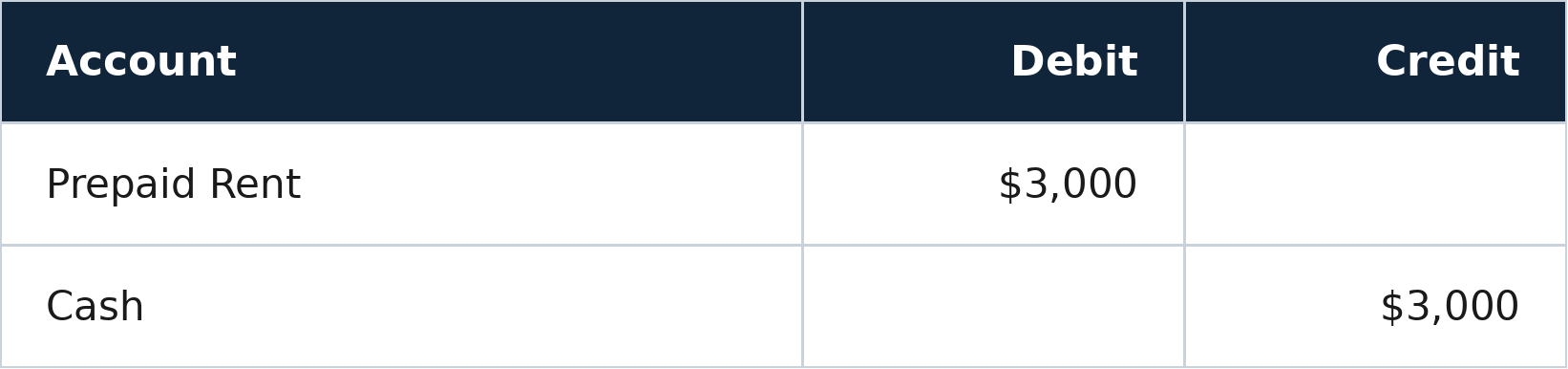
This entry records the cash payment and recognizes an asset before the lease commences.
No lease expense is recognized simply because the payment was made.
Recording Prepaid Rent at Commencement
When the lease commences, the $3,000 prepayment becomes part of the initial ROU asset.
Assuming an initial lease liability of $32,678.98 and no other adjustments, the entry would be:
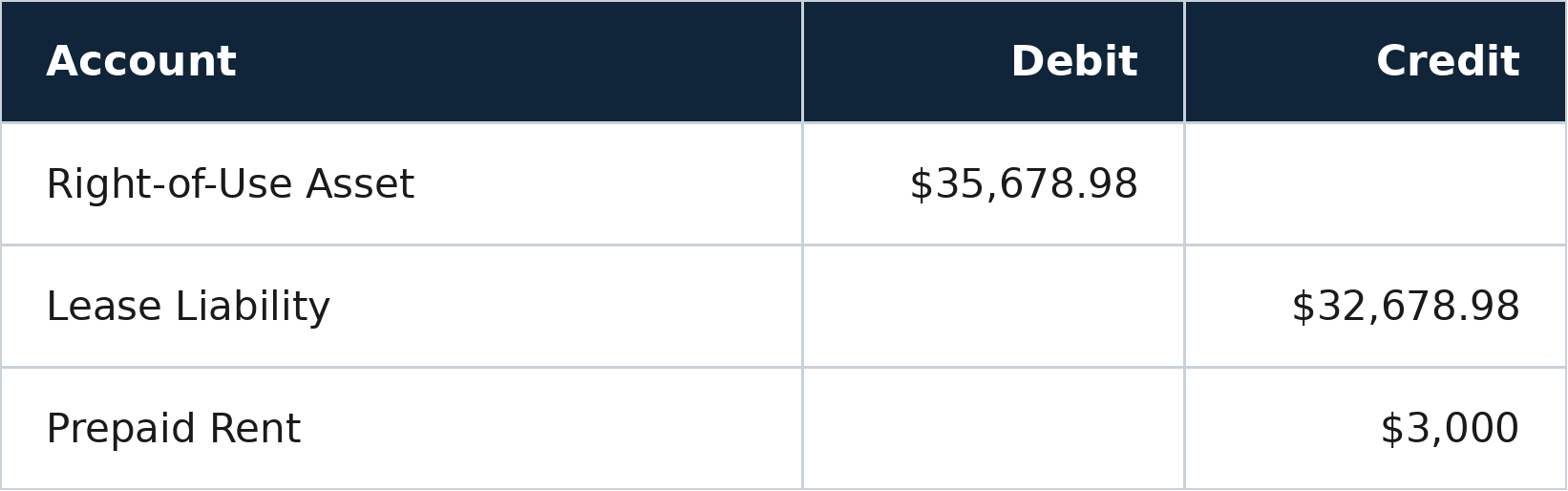
The prepaid rent account is cleared, and the amount becomes part of the ROU asset.
The lease liability reflects the present value of qualifying future payments, while the ROU asset includes the additional amount already paid.
These are simplified initial recognition entries. Actual accounting may involve additional costs, incentives, or other contractual terms.
For more examples, Occupier's guide to lease accounting journal entries explains initial recognition and ongoing entries under ASC 842.
Prepaid Rent Example: Calculating the ROU Asset
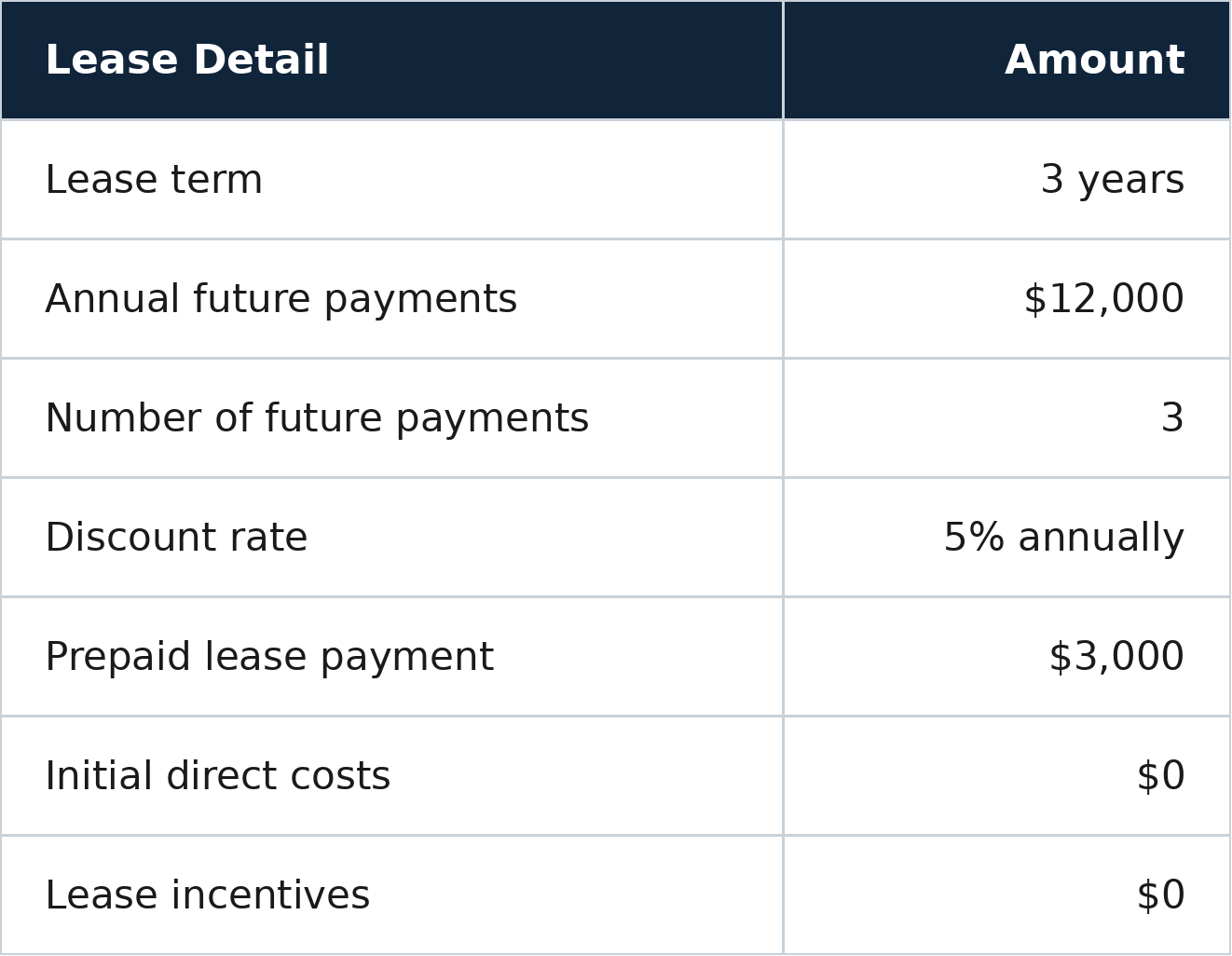
Consider a commercial tenant entering into a three-year office lease.
The agreement requires annual payments of $12,000 at the end of each year, plus a separate nonrefundable $3,000 lease payment made before commencement.
Assume the lease is classified as an operating lease and has no initial direct costs or lease incentives.
The relevant terms are:
Step 1: Calculate the Initial Lease Liability
The initial lease liability is based on the present value of the three unpaid annual payments.
Using a 5% annual discount rate:
Lease Liability = $12,000 ÷ 1.05 + $12,000 ÷ 1.05² + $12,000 ÷ 1.05³
Initial Lease Liability = $32,678.98
The $3,000 prepayment is excluded because it has already been paid.
Step 2: Calculate the Initial ROU Asset
The ROU asset includes the lease liability and the prepaid lease payment.
ROU Asset = $32,678.98 + $3,000
Initial ROU Asset = $35,678.98
The prepayment creates a $3,000 difference between the initial ROU asset and lease liability.
Step 3: Determine Annual Operating Lease Expense
For this simplified operating lease, the total lease payments are:
($12,000 × 3) + $3,000 = $39,000
The annual straight-line lease expense is:
$39,000 ÷ 3 = $13,000
The tenant generally recognizes $13,000 in annual operating lease expense under these assumptions, while the liability is reduced through scheduled payments and the ROU asset is reduced through the operating lease accounting process.
The example shows why prepaid rent must be included in the initial ROU asset even though the amount is excluded from unpaid future lease payments.
Prepaid Rent vs. Accrued Rent vs. Deferred Rent
Prepaid, accrued, and deferred rent are related accounting concepts, but they describe different timing situations.
Prepaid rent occurs when cash is paid before the related lease period.
Accrued rent generally describes rent obligations or expenses associated with a period before the related payment is made.
Deferred rent, under the previous ASC 840 model, commonly represented differences between straight-line rent expense and actual cash payments.
For example, a tenant receiving three months of free rent may recognize lease expense during those months even though no cash payment is required.
Under ASC 842, these differences are generally reflected through the ROU asset and lease liability accounting rather than maintained as the same standalone deferred rent balance used under ASC 840.
However, the terms may still appear in internal accounting discussions and historical records.
Finance teams need to distinguish payment timing from expense recognition and initial lease measurement.
This becomes especially important when reviewing legacy accounts or reconciling balances after transitioning to ASC 842.
Does Prepaid Rent Affect Straight-Line Rent Expense?
Prepaid rent affects the timing of cash payments, but it does not automatically create an immediate lease expense when the payment is made.
For operating leases under ASC 842, a single lease cost is generally recognized on a straight-line basis over the lease term, unless another systematic basis better represents the benefit received.
For example, a company may pay several months of rent before the related occupancy period.
The payment changes cash balances immediately, but expense recognition follows the applicable lease accounting model.
The ROU asset and lease liability schedules reflect the relationship between payments, interest accretion, and lease cost.
Finance leases work differently.
Under a finance lease, interest expense and ROU asset amortization are generally recognized separately rather than as a single straight-line operating lease cost.
This is why the same advance payment can affect the initial ROU asset under both classifications while subsequent expense recognition differs.
What Happens When Rent Is Prepaid During the Lease?
Not every advance payment occurs before lease commencement.
A commercial tenant may pay rent early during an existing lease to simplify administration, meet a contractual requirement, or obtain a negotiated benefit.
The accounting depends on the payment's purpose and whether it changes the contractual payment obligations.
For example, paying next month's scheduled rent a few days early is primarily a payment-timing issue.
The amount may be recorded through a clearing account or against the applicable lease payment schedule, depending on the organization's accounting process.
It does not automatically require remeasurement of the lease liability and ROU asset.
However, if the tenant and landlord amend the lease to change the contractual payment structure, the modification may require reassessment or remeasurement under ASC 842.
Finance teams should distinguish an early cash settlement from a substantive change in lease terms.
The accounting treatment should follow the actual contractual arrangement rather than assuming every advance payment is identical to a prepayment made before commencement.
Common Prepaid Rent Accounting Errors
Prepaid rent accounting becomes more difficult when a company manages many leases with different payment dates and terms.
Several errors can affect financial reporting.
Double-Counting Prepaid Rent
One common mistake is retaining a separate prepaid rent asset after the amount has already been incorporated into the initial ROU asset.
This can overstate assets.
Finance teams should reconcile prepaid balances at commencement and confirm that amounts are not recorded twice.
Including Prepaid Amounts in Future Lease Payments
The initial lease liability is generally based on qualifying lease payments that remain unpaid at commencement.
Including a payment that has already been made can overstate the liability.
The payment should instead be reflected in the initial ROU asset calculation.
Incorrect Payment Timing
Lease payment schedules must distinguish payments made before commencement, at commencement, and after commencement.
An incorrectly dated payment can affect the present value calculation and the resulting accounting entries.
These issues become particularly important when rent is payable at the beginning rather than the end of each period.
Overlooking Lease Incentives
Prepaid amounts are not the only adjustments affecting an ROU asset.
Initial direct costs and lease incentives can also change its measurement.
Failing to record these adjustments accurately can create differences between lease records, accounting schedules, and the general ledger.
Why Prepaid Rent Accounting Matters for Multi-Location Tenants
For businesses managing multiple commercial locations, prepaid rent can become difficult to track consistently.
One landlord may require the first month's rent before commencement. Another may request several months upfront, while a third may offer incentives that affect the initial ROU asset.
The real estate team negotiates these terms, but finance is responsible for recording them correctly.
If payment schedules and commencement dates are maintained in different systems, the accounting may rely on incomplete or outdated information.
A lease amendment, commencement delay, or change in payment terms can create additional reconciliation work.
For example, a retailer managing 100 locations may need to confirm which leases include upfront payments, when those payments occurred, and how they were reflected in each initial ROU asset.
These details affect journal entries, financial reporting, and audit documentation.
Keeping the underlying lease information connected to accounting calculations reduces the need to reconstruct payment histories during month-end close.
Keeping Prepaid Rent and Lease Accounting Records Aligned
Prepaid rent illustrates why lease administration and accounting need to work from consistent information.
Real estate teams manage commencement dates, negotiated payments, and lease amendments. Finance teams use those records to calculate lease liabilities, ROU assets, and recurring accounting entries.
When the information is disconnected, an advance payment may be recorded correctly in one system but omitted from the lease accounting schedule.
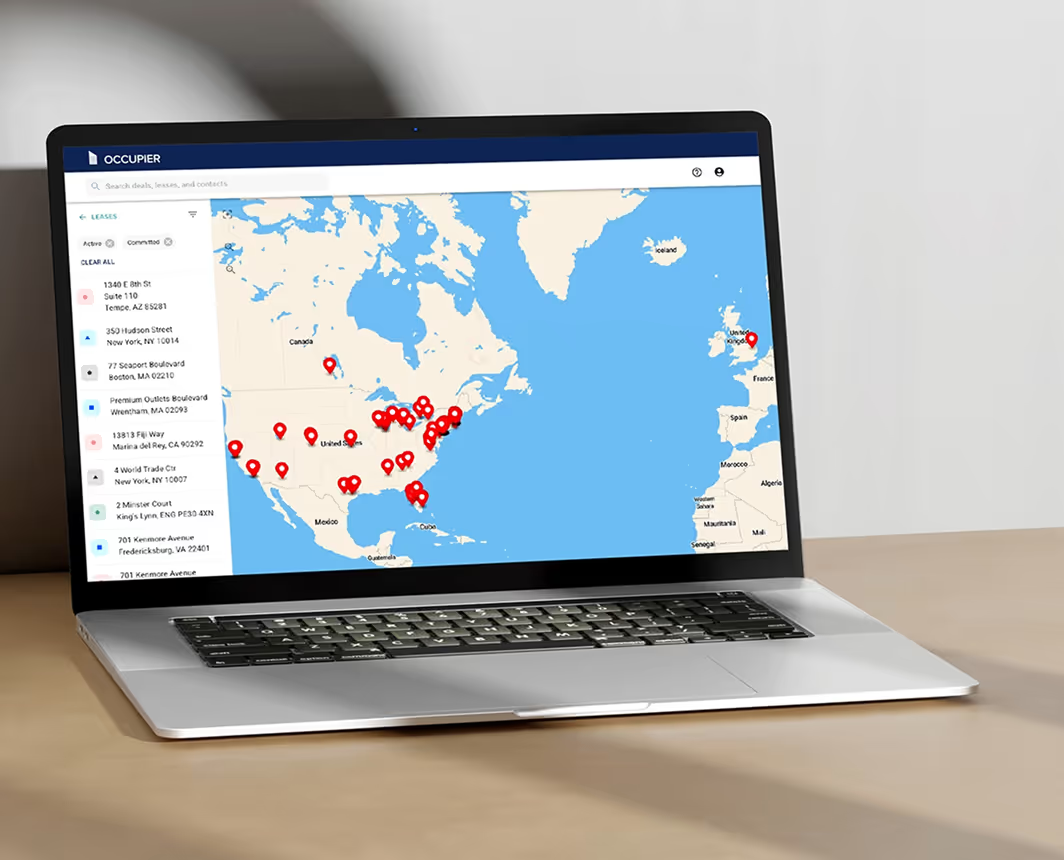
Occupier's lease accounting software connects lease records with ASC 842 calculations, ROU asset measurements, journal entries, and financial reporting.
Its shared data approach helps real estate and finance teams keep lease changes and accounting records aligned.
The goal is not simply to record prepaid rent correctly at commencement. It is to maintain accurate lease measurements and supporting documentation throughout the agreement.
Prepaid Rent Under ASC 842 FAQs
Is prepaid rent an asset or liability?
Prepaid rent is an asset because it represents payment for future use of leased property. Under ASC 842, qualifying prepayments made at or before commencement are generally included in the ROU asset rather than presented separately after commencement.
Is prepaid rent a current asset under ASC 842?
Before lease commencement, prepaid rent may be temporarily recognized as a current asset. At commencement, qualifying prepayments are generally incorporated into the ROU asset, which is ordinarily presented as a noncurrent lease asset.
Does prepaid rent increase the ROU asset?
Yes. Qualifying lease payments made at or before commencement increase the initial ROU asset. They are added to the initial lease liability along with applicable initial direct costs, less lease incentives received.
Does prepaid rent reduce the lease liability?
Prepaid amounts made at or before commencement are excluded from the unpaid future payments used to calculate the initial lease liability. Payments made after commencement may reduce the outstanding liability according to the payment schedule and applicable accounting treatment.
What is the journal entry for prepaid rent?
Before commencement, the entry may debit Prepaid Rent and credit Cash. At commencement, the prepaid balance is incorporated into the ROU asset and the temporary prepaid rent account is cleared.
Is prepaid rent recorded as an expense immediately?
No. Paying rent in advance does not automatically create an immediate expense. Under ASC 842, lease expense is recognized according to the applicable operating or finance lease accounting requirements.
What is the difference between prepaid rent and deferred rent?
Prepaid rent occurs when cash is paid before the related lease period. Deferred rent traditionally refers to differences between cash payments and straight-line rent expense. Under ASC 842, those timing differences are generally reflected through the ROU asset and lease liability model.
How does prepaid rent affect the balance sheet?
Before commencement, prepaid rent may appear as a separate asset. At commencement, qualifying amounts are incorporated into the ROU asset. The lease liability separately reflects qualifying payments that remain unpaid at that date.



Lease management that works for real estate and finance
15,000 sq ft
90 days notice
March 2026
Action required