Real Estate Transaction Management Software: Benefits and Features

What Is Real Estate Transaction Management Software Used For?
Real estate transaction management software is used to organize property transactions, manage documents, track deadlines, coordinate stakeholders, and monitor deal progress. In commercial real estate, it commonly supports new leases, renewals, relocations, and expansion-related transactions.
Real estate transaction management software helps commercial real estate teams organize deals, track deadlines, manage documents, and coordinate everyone involved in a transaction. Instead of relying on spreadsheets, email threads, and separate file folders, businesses can follow each deal from the initial property search through negotiations and lease execution.
For companies managing multiple locations, that visibility matters. A real estate team might be evaluating several new sites while negotiating lease renewals, coordinating legal reviews, and seeking financial approvals. Each transaction involves different stakeholders, documents, and decisions that need to stay organized.
The right software makes those responsibilities easier to manage. It gives teams a clearer picture of their active transactions, helps prevent important tasks from being overlooked, and supports more informed decisions throughout the commercial leasing process.
What Is Real Estate Transaction Management Software?
Real estate transaction management software is a digital platform that helps businesses coordinate the activities, documents, deadlines, and people involved in real estate transactions. It provides a centralized place to manage deal information, assign responsibilities, monitor progress, and maintain records as transactions move toward completion.
In commercial real estate, these transactions can include new leases, renewals, relocations, expansions, subleases, and other property-related agreements. The process often involves real estate managers, brokers, finance departments, legal teams, landlords, and internal decision-makers.
Unlike general project management tools, real estate transaction platforms are designed around property and deal information. Teams can organize proposed lease terms, compare locations, track letters of intent (LOIs), manage negotiations, and record approvals.
The goal isn't simply to move a deal forward more quickly. It's to make sure the right information reaches the right people when decisions need to be made.
How Does Transaction Management Software Work in Commercial Real Estate?
Commercial real estate transactions move through several stages before an agreement is executed. A transaction management platform helps teams maintain an organized record as a potential location progresses from an opportunity to a signed lease.
The process commonly includes:
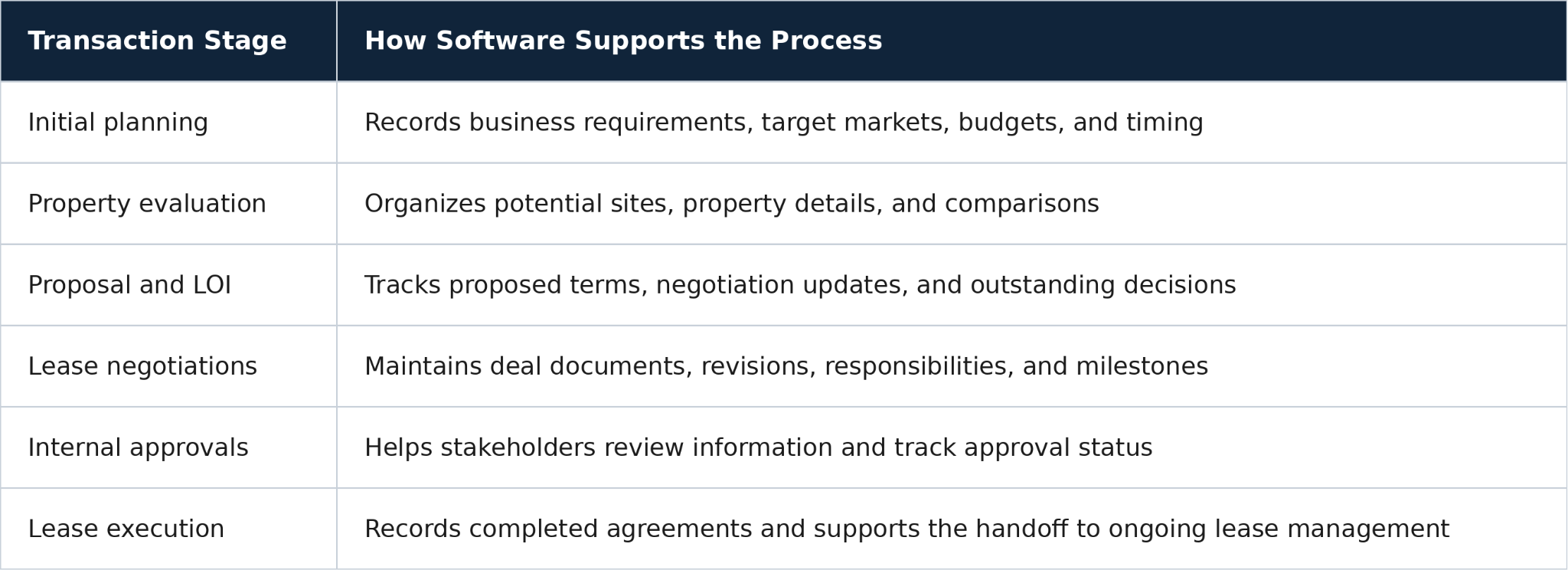
Consider a restaurant company planning to open several new locations. Its real estate team may begin by evaluating properties using market research and site selection software. Once promising locations are identified, transaction management software helps organize proposals, track negotiations, and coordinate approvals.
Every company may follow a slightly different workflow, but the underlying requirement is the same: maintain accurate information and clear responsibilities as the transaction moves forward.
7 Benefits of Real Estate Transaction Management Software
The benefits become particularly noticeable when businesses manage multiple transactions at once. Here are seven ways a dedicated platform can improve the process.
1. Centralizes Deal Information
One of the biggest challenges in commercial real estate is keeping transaction information organized.
Property details may live in spreadsheets, lease proposals may be stored in shared drives, and negotiation updates may be buried in email conversations. When a stakeholder needs the latest information, someone must collect it from several sources.
Transaction management software brings that information into a shared deal record. Teams can review property details, proposed financial terms, supporting documents, and transaction status without rebuilding the history of each deal.
This reduces the time spent searching for information and makes it easier for stakeholders to work from consistent records.
2. Improves Visibility Across the Deal Pipeline
A real estate department may have dozens of active transactions at different stages. Some properties are still being evaluated, others are under negotiation, and several may be waiting for internal approval.
Without a centralized pipeline, understanding overall progress can become a reporting exercise.
Transaction management software allows teams to review active deals by stage, market, expected timing, or other relevant criteria. Managers can identify stalled transactions, prioritize upcoming decisions, and understand where resources are needed.
For companies tracking expansion goals, maintaining a structured commercial real estate deal pipeline also makes it easier to compare planned activity with actual progress.
3. Reduces Manual Administrative Work
Managing transactions manually involves repetitive activities, including updating spreadsheets, locating documents, sending reminders, and preparing status reports.
These responsibilities take time away from the activities that require more direct attention, such as evaluating locations and negotiating lease terms.
Transaction management platforms can reduce manual work through shared records, automated notifications, task assignments, and centralized reporting.
For example, instead of contacting multiple brokers individually for updates, a real estate manager can review the latest information in the deal pipeline. Team members can then focus on issues that need decisions rather than routine status collection.
Automation won't eliminate every administrative responsibility, but it can make recurring work more manageable.
4. Strengthens Collaboration Between Stakeholders
Commercial real estate transactions rarely involve only the real estate department.
Brokers evaluate available properties, finance teams review financial commitments, attorneys examine contractual language, and operations leaders assess whether a location meets business requirements.
When communication happens through separate email threads, important decisions can become difficult to trace. A revised proposal might reach one department while another continues reviewing an earlier version.
A shared transaction platform helps keep documents, updates, and responsibilities connected to the relevant deal.
This provides stakeholders with better context and helps teams coordinate decisions without relying entirely on individual employees to distribute information.
5. Supports More Informed Lease Negotiations
Negotiating a commercial lease requires understanding more than the proposed base rent.
Tenants may need to evaluate operating expenses, tenant improvement allowances, rent escalations, renewal options, and other provisions that affect the cost and flexibility of occupying a property.
Transaction management software can help organize proposed terms and maintain a record of changes during negotiations.
For example, a retailer comparing two potential locations may find that one offers lower starting rent but includes larger annual increases. Keeping financial terms organized makes it easier to understand those differences before choosing a property.
Software supports this analysis, but it doesn't replace a well-developed lease negotiation strategy or the professional judgment of brokers, attorneys, and real estate leaders.
6. Helps Teams Stay Ahead of Deadlines
Every transaction includes important milestones. These may involve submitting an LOI, reviewing a lease draft, obtaining financial approval, responding to a landlord, or completing execution requirements.
When multiple transactions are underway, tracking those responsibilities manually increases the chance of overlooking an important step.
Transaction management software helps teams organize deadlines, assign ownership, and monitor outstanding activities.
Imagine a healthcare company negotiating leases for several new clinics. One location may be awaiting legal review while another requires approval of construction costs. A shared system helps the team identify the next required action for each transaction without confusing the two.
This doesn't guarantee that every deadline will be met, but it makes responsibilities easier to monitor.
7. Provides Better Information for Portfolio Planning
Transaction information is useful beyond the individual deal.
Companies can review how long transactions take, which markets have the most active opportunities, and where proposals frequently encounter delays.
For example, a retailer with an annual goal of opening 15 locations may discover that legal reviews or internal approvals consistently take longer than expected. That information can help the business adjust its planning process or begin future transactions earlier.
Historical deal records can also help teams understand previous negotiations and location decisions when evaluating new opportunities.
Over time, more consistent transaction information supports better planning, budgeting, and coordination between real estate and finance teams.
What Features Should Real Estate Transaction Management Software Include?
Not every transaction management platform is designed for the same audience. Residential brokerages may prioritize purchase contracts, closing documents, and commission tracking, while commercial tenants often need tools for site evaluation, lease negotiations, and portfolio-level reporting.
For commercial real estate teams, several capabilities are especially valuable.
Deal pipeline tracking: The platform should provide a clear overview of active transactions, including deal stages, expected completion dates, responsible stakeholders, and outstanding activities.
Document management: Teams need a consistent place to store proposals, LOIs, lease drafts, and other transaction records. Maintaining organized document histories can reduce confusion during negotiations.
Task and deadline management: The ability to assign responsibilities, track milestones, and receive reminders helps teams coordinate work across departments.
Property and financial comparisons: Commercial tenants should be able to compare proposed locations and lease terms, including rent, square footage, operating expenses, and other important financial considerations.
Collaboration and reporting: Shared access, appropriate permissions, and useful reporting tools allow stakeholders to participate in transactions without losing visibility into their progress.
The right combination depends on the business. A company opening a handful of locations each year may have different reporting requirements from an enterprise managing hundreds of transactions across several markets.
Real Estate Transaction Management Software vs. Spreadsheets
Spreadsheets remain useful for basic tracking and analysis. For smaller teams with limited transaction activity, a well-maintained spreadsheet may be sufficient.
However, the limitations become more apparent as transaction volume and stakeholder involvement increase.
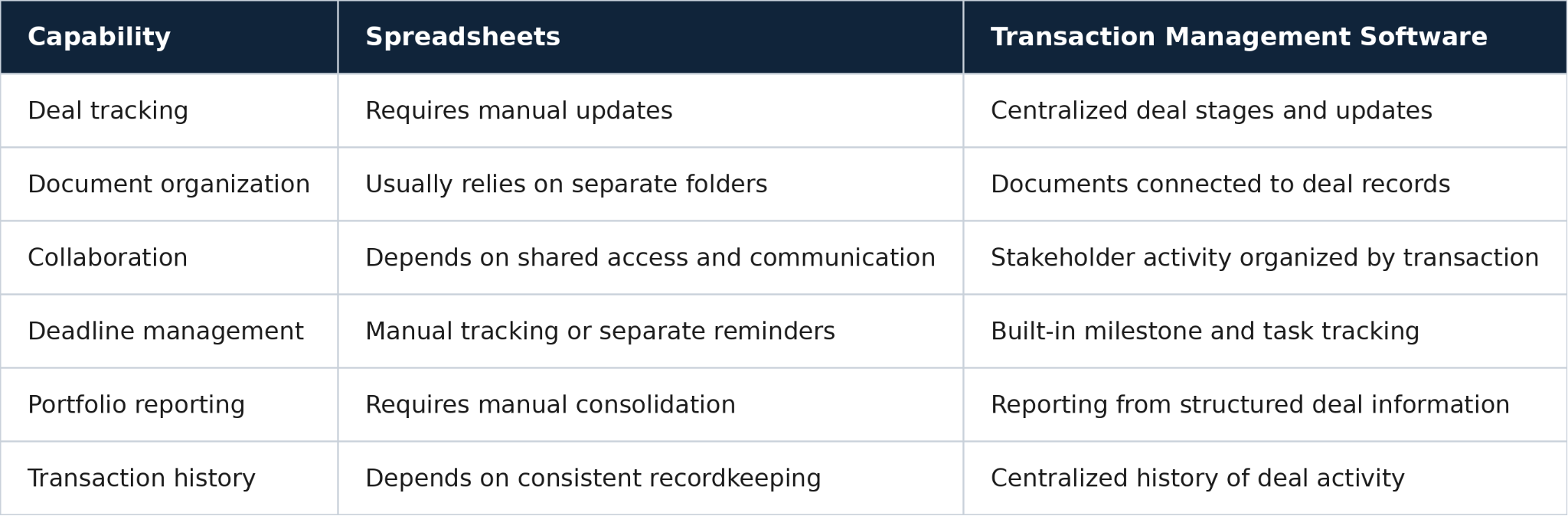
The main difference isn't simply convenience. Dedicated software is designed to connect information, responsibilities, and decisions within the transaction itself.
Spreadsheets can still play a supporting role, but businesses should evaluate whether maintaining them as the primary tracking system creates unnecessary work.
How to Choose the Right Transaction Management Software
Choosing a platform begins with understanding how your real estate team currently handles transactions.
Look at the volume of active deals, the number of stakeholders involved, and the points where information becomes difficult to manage. A team that struggles with internal approvals may need different capabilities from one primarily concerned with property comparisons.
Next, evaluate how the platform supports actual commercial leasing workflows. During a demonstration, ask the vendor to show how a new location moves from initial evaluation through LOI, negotiation, approval, and lease execution.
Pay particular attention to whether the system can maintain a clear record of financial terms and decisions as the deal progresses. This matters when different departments are responsible for reviewing information.
Finally, consider implementation, access permissions, reporting, integration requirements, and ongoing support. A system should fit the way your business operates without creating another disconnected source of information.
Connecting Transaction Management With Lease Administration
A commercial transaction doesn't stop affecting the business once the agreement is signed.
The final lease contains financial terms, renewal options, critical dates, and operational responsibilities that must be managed throughout the occupancy period.
If transaction details remain in a separate system, lease administrators may need to collect documents and re-enter information after execution. That creates another opportunity for inconsistent records or missing context.
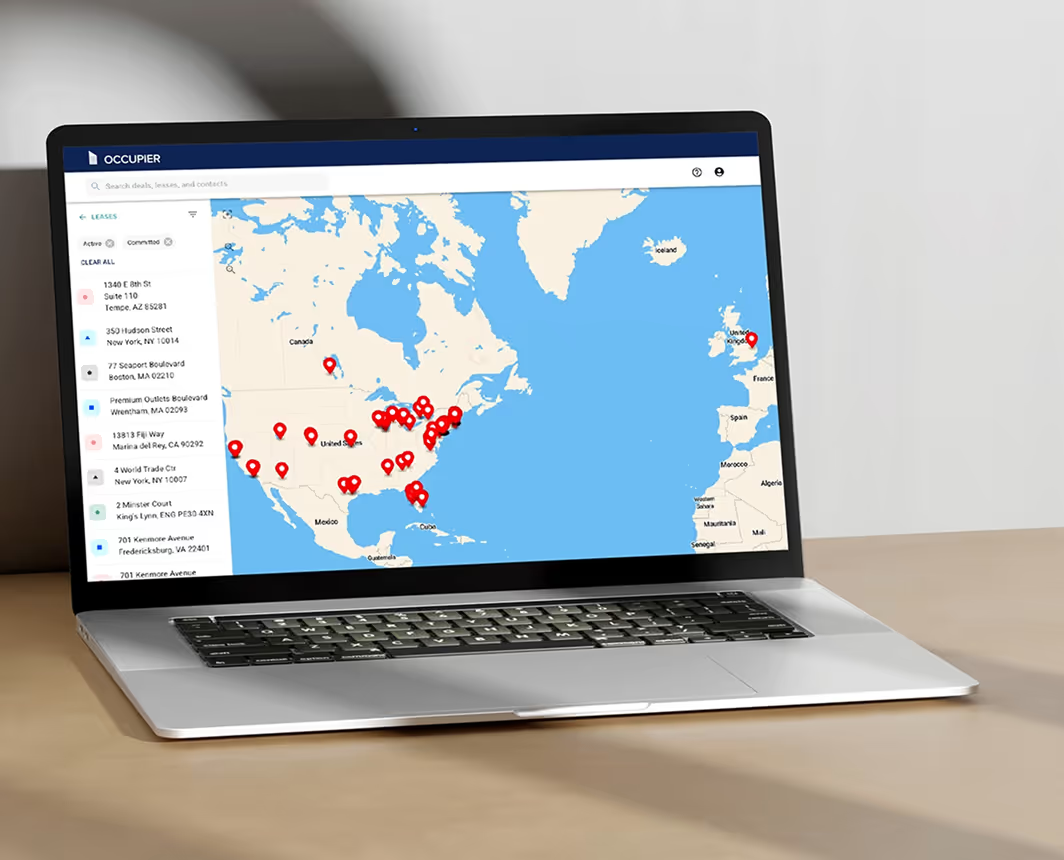
Occupier's Deal Management software helps commercial tenants coordinate their deal pipelines, compare proposed locations, manage negotiations, and collaborate with internal teams and brokers.
When a transaction is completed, Occupier connects the deal record with lease administration, allowing the information gathered during negotiations to support ongoing lease management.
For multi-location businesses, this connection helps maintain continuity between acquiring a location and managing its contractual obligations over time.
Frequently Asked Questions About Real Estate Transaction Management Software
What Is Real Estate Transaction Management Software Used For?
Real estate transaction management software is used to organize property transactions, manage documents, track deadlines, coordinate stakeholders, and monitor deal progress. In commercial real estate, it commonly supports new leases, renewals, relocations, and expansion-related transactions.
Who Uses Real Estate Transaction Management Software?
Commercial real estate managers, tenant representation brokers, transaction managers, legal teams, and finance professionals may all use transaction management software. Their access and responsibilities depend on their involvement in each deal.
What Is the Difference Between Transaction Management and Lease Management?
Transaction management focuses on coordinating a deal before execution, including property evaluation, negotiations, approvals, and documentation. Lease management focuses on the ongoing administration of executed leases, including financial obligations, critical dates, and renewals. Some platforms connect both processes.
Can Transaction Management Software Help Close Deals Faster?
It can help reduce administrative delays by keeping information organized, improving communication, and making outstanding tasks more visible. However, the overall transaction timeline still depends on factors such as negotiations, legal reviews, landlord responsiveness, and internal approvals.
Is Transaction Management Software Worth It for Small Real Estate Teams?
It depends on transaction complexity rather than team size alone. A small team handling several complicated commercial transactions may benefit from centralized records and collaboration tools. Teams managing only occasional, straightforward transactions may find spreadsheets sufficient until their requirements grow.



Lease management that works for real estate and finance
15,000 sq ft
90 days notice
March 2026
Action required