What Is a Tenant Estoppel Certificate? A Guide for Commercial Tenants
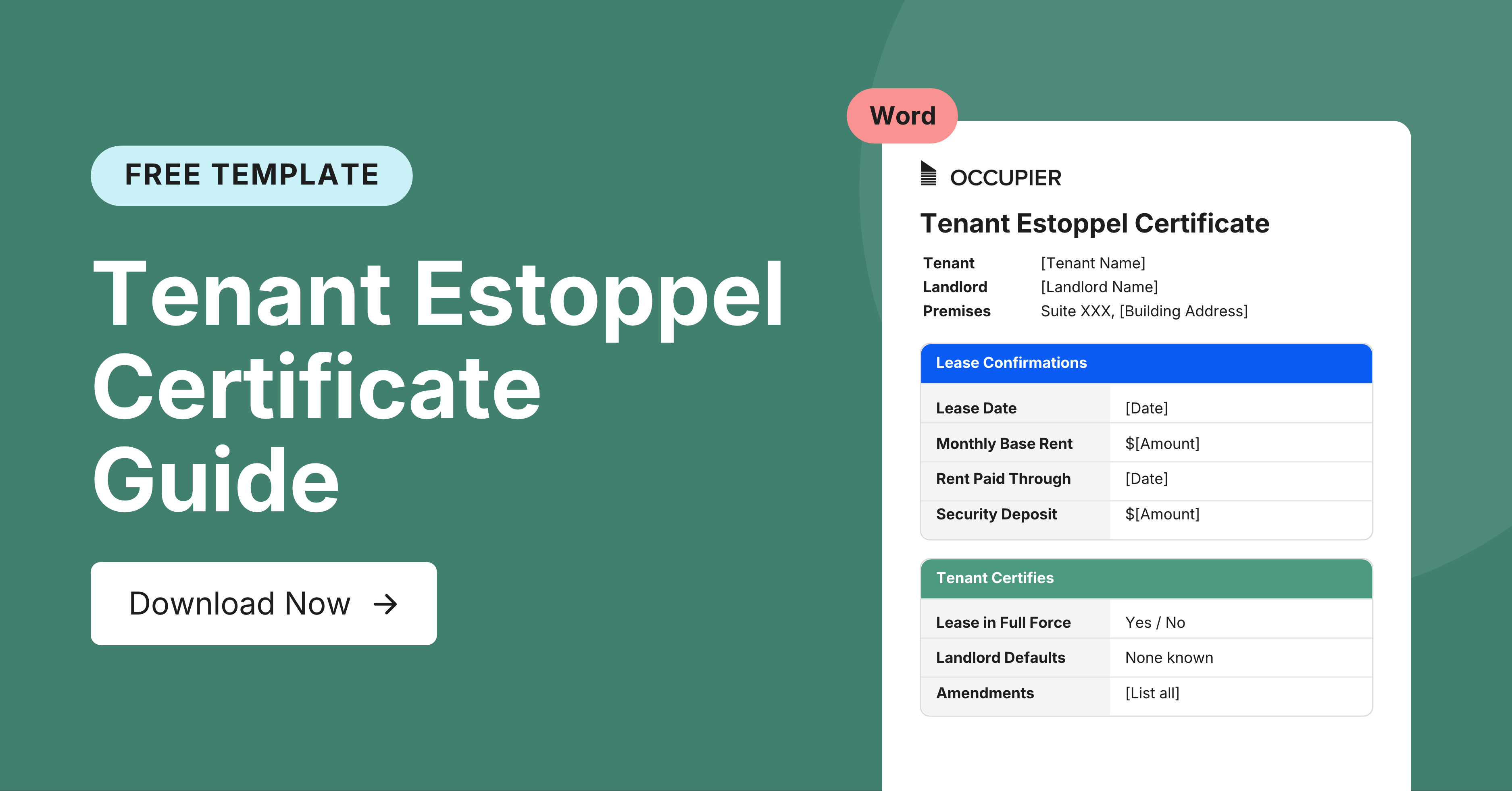
What is the purpose of a tenant estoppel certificate?
A tenant estoppel certificate confirms important facts about a commercial lease for a buyer, lender, or another designated party. It helps verify rent, lease dates, obligations, and outstanding disputes before a property transaction.
A tenant estoppel certificate is a signed document that confirms the current terms and status of a commercial lease. Landlords typically request one when selling or refinancing a property, allowing buyers and lenders to verify rent payments, lease dates, security deposits, and outstanding obligations.
For commercial tenants, an estoppel certificate is more than a routine form. The information they certify can affect their ability to enforce lease rights or dispute contractual terms later. An incorrect statement about a renewal option, unpaid allowance, or landlord default could create significant problems after ownership changes.
Understanding how estoppel certificates work, what they include, and what to review before signing helps tenants protect their interests while meeting their lease obligations.
What Is an Estoppel Certificate in Commercial Real Estate?
An estoppel certificate is a written statement in which a tenant verifies specific facts about an existing lease. It generally confirms that the lease is in effect, identifies the current financial terms, and discloses any known disputes or outstanding obligations.
The term estoppel comes from a legal principle that can prevent someone from contradicting an earlier representation when another party has relied on it.
For example, a tenant might sign a certificate stating that its lease expires in December 2029 and includes no renewal options. If the original agreement actually provides a five-year extension, the tenant could face difficulties enforcing that right against a buyer who relied on the certificate.
An estoppel certificate does not ordinarily replace the original lease. Its purpose is to confirm existing information, but inaccurate statements can still have legal consequences. Understanding the underlying commercial lease agreement is essential before confirming what the tenant is legally entitled to.
Why Do Landlords Request Tenant Estoppel Certificates?
Landlords commonly request estoppel certificates during commercial property sales, refinancing, and other transactions involving third-party review of existing leases.
Property Sales and Acquisitions
When purchasing a commercial building, buyers need to understand the leases attached to the property. These agreements determine rental income, future occupancy, and the obligations the new owner may inherit.
A tenant estoppel certificate helps verify whether the landlord's records accurately reflect the current lease terms.
For example, a buyer might receive a lease showing monthly rent of $10,000. However, the tenant may have negotiated a temporary reduction that does not appear in the original agreement. The certificate can help identify that difference before the transaction closes.
Commercial Property Refinancing
Lenders also request estoppel certificates when evaluating properties used as loan collateral.
They want confirmation that tenants are paying rent, leases remain effective, and no significant disputes could affect future income.
A lender may review the certificates alongside lease agreements, rent rolls, and other financial documents to assess the property's financial stability.
Confirming Outstanding Obligations
An estoppel certificate can identify issues that are not immediately apparent from the original lease.
These might include unpaid tenant improvement allowances, unresolved maintenance obligations, or rent concessions agreed upon after signing.
For tenants, the process provides an opportunity to ensure these matters are accurately disclosed before another party relies on the information.
What Information Is Included in a Tenant Estoppel Certificate?
Most commercial tenant estoppel certificates request similar information, although the exact requirements depend on the lease and transaction.
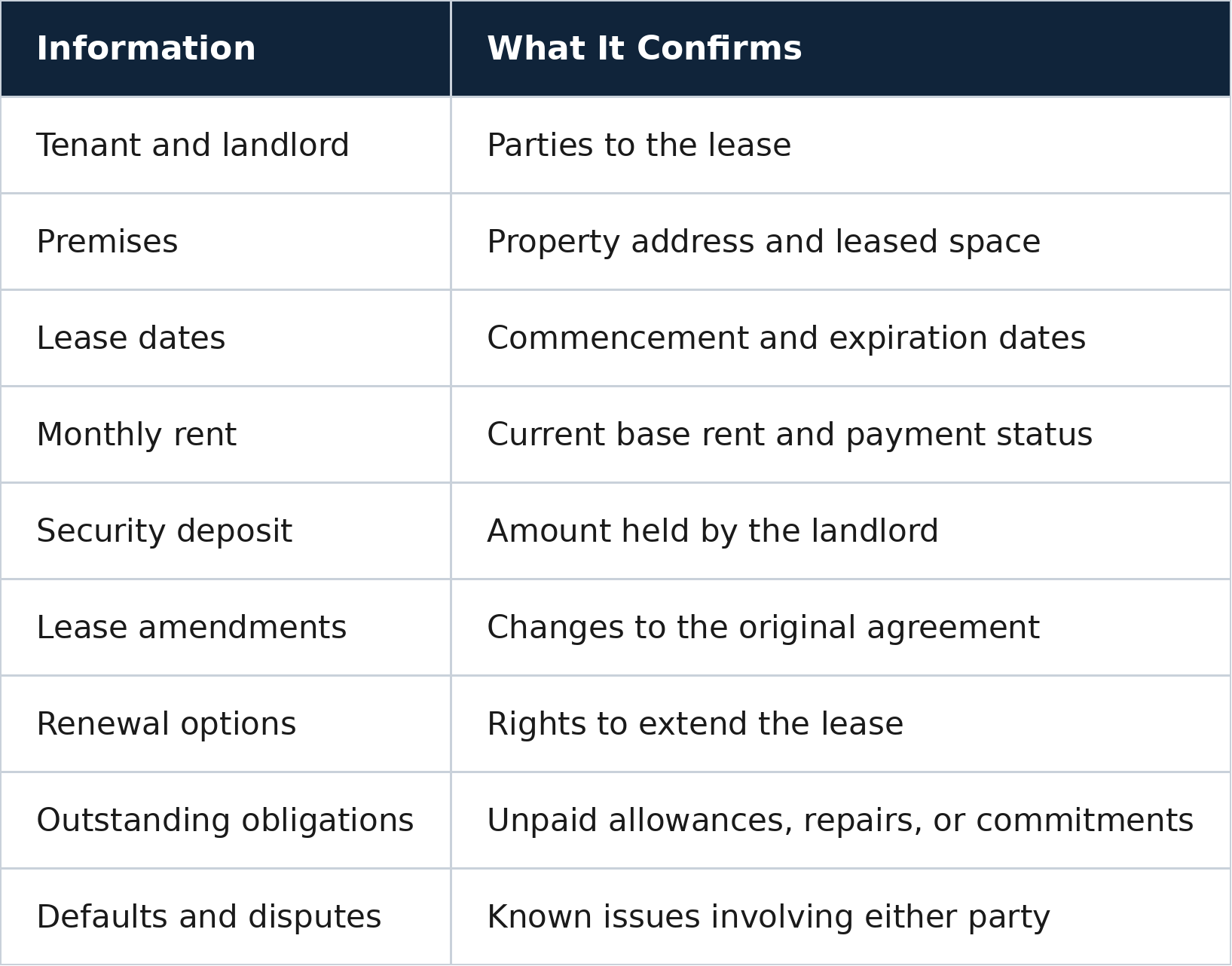
Some certificates also address prepaid rent, termination rights, expansion options, and additional charges such as common area maintenance (CAM).
These additional expenses can represent a substantial portion of a tenant's total occupancy costs. Understanding how CAM charges are calculated helps tenants verify whether the amounts stated in the certificate match their contractual obligations.
The most important consideration is whether the information accurately reflects the executed lease, amendments, and current financial records.
Is a Tenant Required to Sign an Estoppel Certificate?
A commercial tenant may be required to sign an estoppel certificate if the lease includes an applicable estoppel provision.
These clauses commonly require tenants to provide written confirmation of lease information within a specified period after receiving the landlord's request.
Some leases allow ten or fifteen business days, while others establish different deadlines. There is no universal response period for every commercial lease.
If the tenant fails to comply, the landlord may pursue remedies available under the agreement. Some leases also contain provisions addressing what happens when a tenant does not respond.
However, an obligation to provide an estoppel certificate does not necessarily mean the tenant must accept inaccurate information or additional representations beyond the lease requirements.
Tenants should review the applicable provision and request corrections when necessary.
What Happens if a Tenant Refuses to Sign?
Refusing to provide an estoppel certificate can create contractual problems when the lease expressly requires one.
Depending on the agreement, the landlord may issue a default notice or pursue other available remedies. A missing certificate can also delay a property sale or refinancing transaction if the buyer or lender requires confirmation from the tenant.
Some leases contain provisions addressing nonresponse, including allowing specified lease facts to be treated as confirmed. Their effect depends on the contractual language and applicable law.
The better approach is usually to respond promptly, identify discrepancies, and request appropriate revisions.
A tenant who disagrees with a statement should document the concern rather than sign information it knows to be incorrect.
How to Review a Tenant Estoppel Certificate Before Signing
An estoppel certificate may be only a few pages long, but the statements it contains can affect important contractual rights.
A consistent review process helps commercial tenants identify errors before the document reaches a buyer or lender.
1. Compare the Certificate With the Lease
Start with the executed lease agreement and review every amendment, extension, and relevant supplemental agreement.
Confirm that the certificate reflects the current rent, expiration date, renewal options, and other material provisions.
A lease signed several years earlier may have been amended multiple times. Relying only on the original agreement can result in outdated information.
Reviewing commercial lease amendments is especially important when rent adjustments, extensions, or changes to landlord responsibilities have occurred.
2. Verify Financial Information
Compare the certificate against rent schedules, invoices, payment records, and security deposit documentation.
Check base rent, additional rent, outstanding credits, and any unpaid landlord reimbursements.
For example, if a landlord still owes $15,000 toward tenant improvements, signing a statement that all landlord obligations have been completed could create a dispute later.
Finance and real estate teams should review the figures together when responsibilities are divided between departments.
3. Confirm Renewal and Termination Rights
Review any remaining renewal options, early termination rights, expansion provisions, and other contractual rights.
These provisions can materially affect a tenant's long-term real estate strategy.
A missed renewal option may be particularly costly when the location performs well and the tenant wants to remain after the initial term expires.
Maintaining accurate lease critical date records helps teams verify renewal and expiration information without repeatedly reviewing lengthy agreements.
4. Identify Outstanding Landlord Defaults
Many certificates ask tenants to confirm that the landlord has fulfilled all obligations under the lease.
Before agreeing, check whether any required repairs, improvements, reimbursements, or other commitments remain unresolved.
If an issue exists, the certificate should accurately disclose it rather than provide an unqualified statement that no defaults are present.
5. Review Broad Legal Statements
Pay attention to language stating that the tenant has no claims, defenses, offsets, or rights against the landlord.
These representations may go beyond confirming basic lease information.
Tenants should also identify the parties entitled to rely on the certificate, including prospective buyers and lenders.
If the document contains unfamiliar language, potential waivers, or statements that conflict with the lease, legal review is advisable.
Tenant Estoppel Certificate Example
Consider a restaurant company leasing a 3,000-square-foot location in a shopping center.
The landlord plans to sell the property and sends the restaurant an estoppel certificate for signature.
The tenant's records show the following:
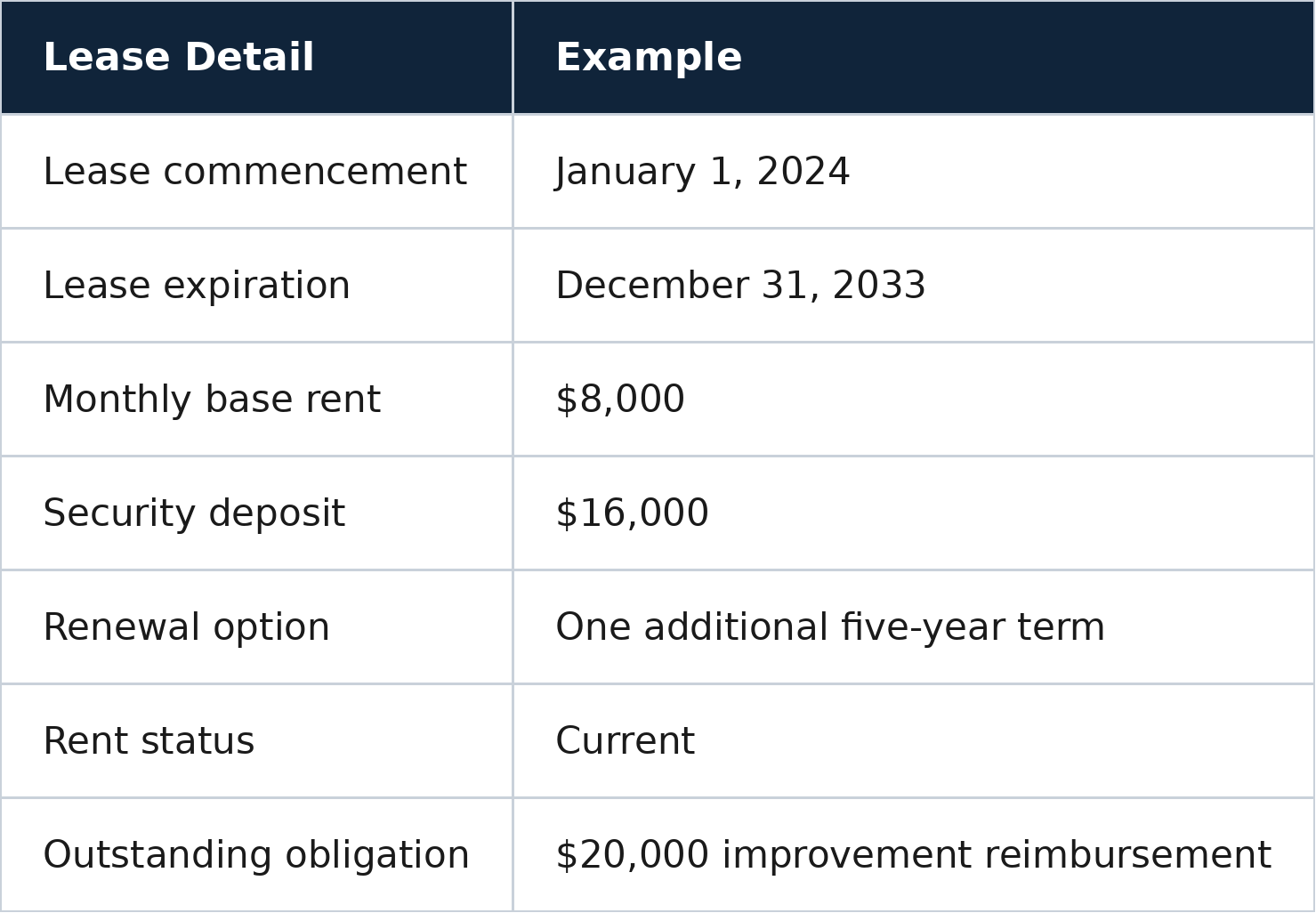
The landlord's certificate correctly identifies the rent and expiration date but states that the tenant has no remaining renewal options and that all landlord obligations have been satisfied.
Both statements are inaccurate.
If the restaurant signs without correcting them, the new owner may later rely on those representations when evaluating the renewal right or outstanding reimbursement.
The restaurant should request revisions that identify the five-year renewal option and unpaid $20,000 allowance.
This illustrates why a tenant estoppel certificate should be verified against actual lease records rather than treated as a routine administrative request.
Can an Estoppel Certificate Override a Lease Agreement?
An estoppel certificate is generally intended to confirm existing lease terms rather than amend them.
However, a signed certificate can affect the tenant's ability to assert rights that contradict its earlier representations.
If a purchaser or lender relies on an inaccurate statement, the tenant may face legal challenges when attempting to enforce the original lease terms.
The outcome depends on the certificate's language, the circumstances, applicable law, and whether the receiving party reasonably relied on the statement.
For example, a tenant may have a contractual termination right but sign a certificate incorrectly stating that no such right exists. That inconsistency could become significant during a future dispute.
Correcting discrepancies before signing is considerably safer than assuming the original agreement will resolve them afterward.
Estoppel Certificate vs. SNDA: What's the Difference?
An estoppel certificate and a subordination, non-disturbance, and attornment agreement (SNDA) are different documents often requested during commercial real estate transactions.
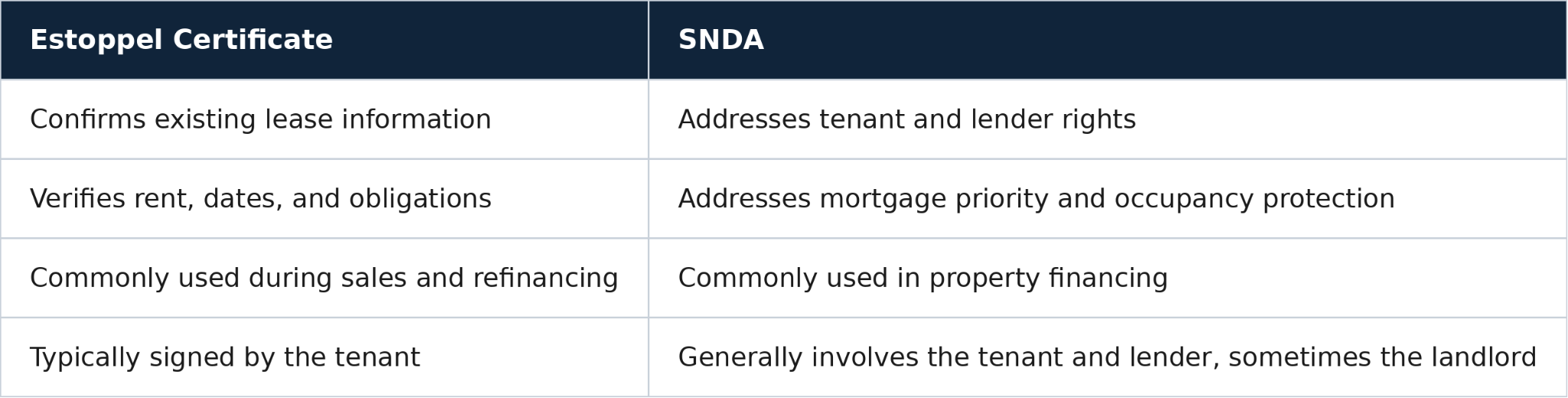
An SNDA generally addresses whether the lease is subordinate to a lender's mortgage, whether the tenant can remain after foreclosure under specified conditions, and whether the tenant will recognize a successor landlord.
An estoppel certificate primarily confirms the lease's current status.
Although the documents may be requested together, tenants should evaluate each separately because they serve different legal purposes.
Tenant Estoppel Certificate Checklist
Before signing, commercial tenants should confirm that:
- The tenant, landlord, and premises are correctly identified.
- The original lease and amendments are accurately referenced.
- Rent amounts, deposits, and payment information match the records.
- Lease dates and remaining renewal options are correct.
- Outstanding landlord obligations and disputes are disclosed.
- No contractual rights are unintentionally waived.
- Legal and finance teams have reviewed relevant information.
- The signed certificate is retained with the lease documents.
This review becomes particularly important for businesses managing leases across multiple locations.
Organizing these details through lease abstraction can make important contractual terms easier to locate and verify when an estoppel request arrives.
Why Estoppel Certificates Matter for Real Estate and Finance Teams
Estoppel requests often reveal a common problem in commercial lease management: real estate and finance teams may rely on different records.
Real estate teams manage renewal options, lease dates, and landlord obligations. Finance teams track rent payments, deposits, and outstanding reimbursements. Legal teams may maintain amendments that change the original agreement.
When this information is spread across spreadsheets, email accounts, and shared folders, verifying an estoppel certificate can become unnecessarily time-consuming.
For a retail business managing 100 locations, maintaining accurate records becomes essential as property sales and refinancing requests occur across the portfolio.
Occupier's lease administration software helps commercial tenants centralize lease agreements, critical dates, contractual obligations, and financial information in one platform.
With real estate and finance teams working from consistent lease records, businesses can respond to estoppel requests more efficiently while reducing the risk of inaccurate information.
The goal is not simply to sign certificates faster. It is to ensure every statement reflects the tenant's actual lease rights and obligations.
Tenant Estoppel Certificate FAQs
What is the purpose of a tenant estoppel certificate?
A tenant estoppel certificate confirms important facts about a commercial lease for a buyer, lender, or another designated party. It helps verify rent, lease dates, obligations, and outstanding disputes before a property transaction.
Who prepares an estoppel certificate?
The landlord, buyer, lender, or their representatives typically prepare the certificate. The tenant reviews the information, identifies necessary corrections, and signs the document when the statements are accurate.
How long does a tenant have to return an estoppel certificate?
The response deadline depends on the commercial lease. Some agreements require a response within ten or fifteen business days, while others specify different periods.
Is a tenant estoppel certificate legally binding?
It can have significant legal consequences. A tenant may be prevented from contradicting statements that a buyer or lender relied upon, depending on the certificate's language and applicable law.
Can a tenant refuse to sign an estoppel certificate?
A tenant may have a contractual obligation to provide one. However, the tenant can generally request corrections to inaccurate statements. The consequences of refusal depend on the lease and applicable law.
Does a tenant estoppel certificate need to be notarized?
Not always. Many certificates require only the tenant's signature, although the lease, transaction requirements, or applicable law may require notarization.
Can an estoppel certificate change lease terms?
Its primary purpose is to confirm existing terms, not create new ones. However, inaccurate representations may affect the tenant's ability to enforce contractual rights later.
Is an estoppel certificate the same as an SNDA?
No. An estoppel certificate verifies lease information, while an SNDA addresses issues such as mortgage priority, non-disturbance rights, and recognition of a successor landlord.



Lease management that works for real estate and finance

15,000 sq ft
90 days notice
March 2026
Action required