Lease accounting software
Lease accounting software that gives finance confidence and real estate control
Automated ASC 842/IFRS 16 compliance without the data chase. Finance gets audit-ready reports from the same portfolio data real estate is updating in real time.
ASC 842
IFRS 16
FRS 102
GASB 87
Trusted by commercial tenants









Key benefits
Lease accounting platform built for compliance and collaboration
done_outline
ASC 842 reports in hours, not weeks
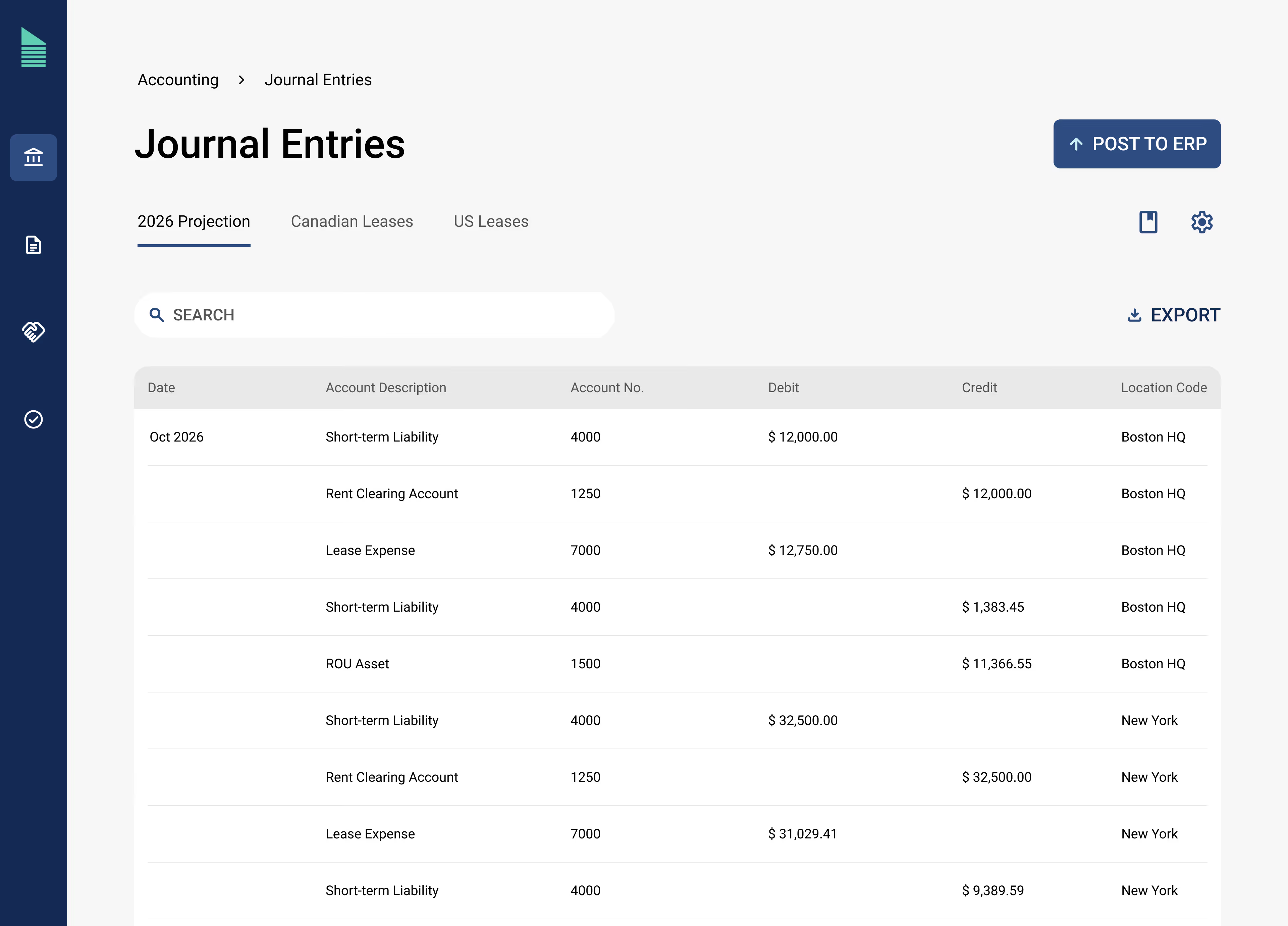
Automated calculations for ROU assets, lease liabilities, and amortization schedules. Generate journal entries and disclosure reports with a few clicks. No more month-end scrambles or manual Excel reconciliations.
sync_alt
Real estate updates flow to finance automatically
When your real estate team changes a lease term or commencement date, finance sees it immediately. No more chasing down amendments or discovering changes during your audit. Both teams work from the same data.
shield
Audit-ready from day one, no scrambling
Complete audit trail for every lease transaction, modification, and calculation. Auditors get the supporting documentation they need without finance scrambling to piece together spreadsheets.

"If you have to work on ASC 842, go with Occupier. It’s got the real estate function and it’ll also do ASC 842. There’s no reason to separate the two.”

Joon Lee
Controller, Yoshinoya
Controller, Yoshinoya
80
Restaurants
Features at a glance
Lease accounting finance teams
actually enjoy using
check
Modern interface
Every lease and schedule in one clean view, shared by real estate and finance.
check
Automated calculations
ROU assets, liabilities, and journal entries, calculated for you.
check
Internal audit
Every change logged with who and when. Auditor questions answered in minutes.
check
ERP integration
Pre-built NetSuite integration, plus exports for your preferred ERP.
check
Financial reporting
Disclosures, roll-forwards, and schedules, ready to export anytime.
check
Fully secure
SOC 2 compliant. Your lease data stays protected.

"Occupier’s lease admin and accounting platform is a great one-two punch. It helps our facilities team a lot and it also helps finance at the same time. It's taken a process that has historically been very manual and turned it into an automated one, which I think anyone would be happy about.”

Sean Grasso
Accounting Manager, Seismic
Accounting Manager, Seismic
15+
Offices globally
Features breakdown
Lease accounting features that keep you audit-ready
CALCULATIONS
Automated calculations from lease terms to journal entries
Occupier calculates ROU assets, lease liabilities, and monthly amortization schedules automatically. Handles rent escalations, modifications, and termination scenarios in real time. Supports ASC 842, IFRS 16, GASB 87, and FRS 102.
CLAUSE SUMMARIES
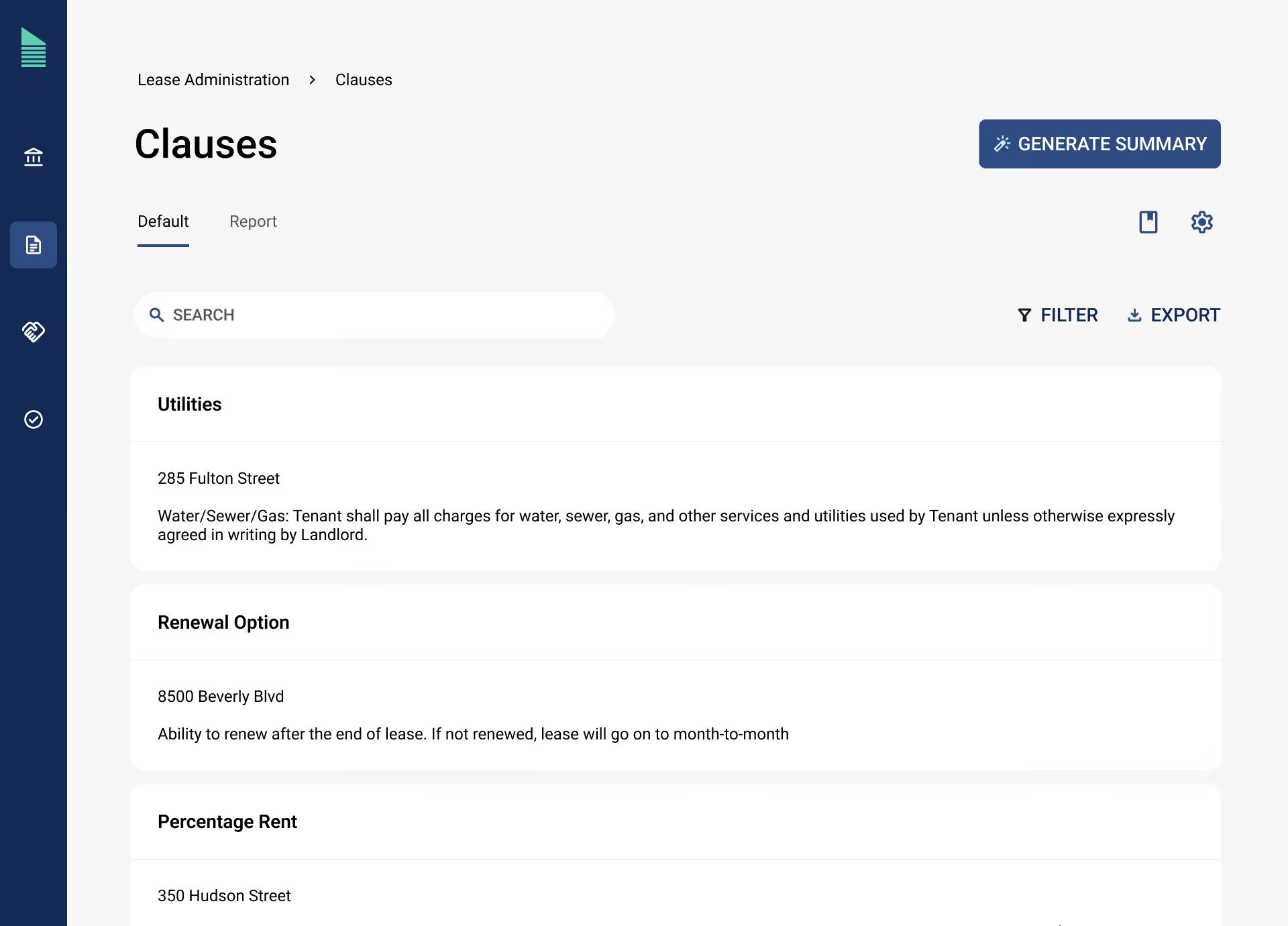
Decode lease clauses in seconds
Stop hunting through dense legal language. Every clause is extracted and summarized so you can quickly see what it means, who's responsible, and what's required. No more reading through pages of complex terms.
AUDIT READY
Audit packages ready when you need them
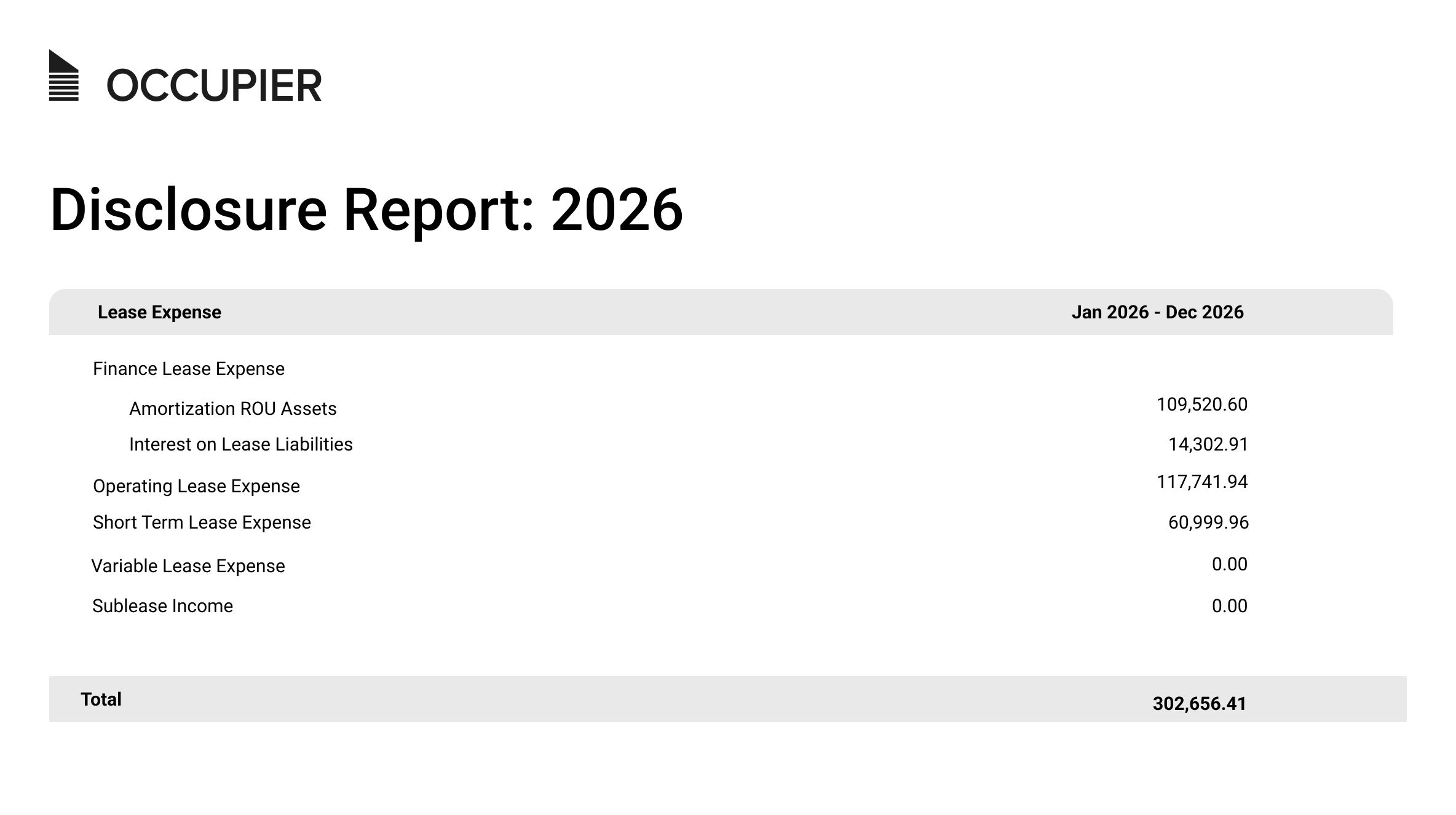
Generate footnote disclosures, lease roll-forwards, maturity schedules, and one-click journal entry exports formatted for your ERP. Full audit trails show every change, assumption, and calculation.
Lease accounting software vs. spreadsheets
A spreadsheet handles a small, static portfolio. It stops working at the point where leases change during the year, more than one person edits the file, or an auditor asks for support that has to be rebuilt rather than retrieved. The failure is rarely a formula error on day one. It is a renewal exercised in March that nobody carried into the schedule.
Lease accounting software that also runs your leases
Occupier vs.
Occupier
Accounting-only
Spreadsheets
Compliance Standards
Built-in ASC 842, IFRS 16, GASB 87, FRS 102
—
Calculations
Automated ROU assets, liabilities, and amortization
—
Automated remeasurement
—
REPORTING & AUDIT
Trial balance, roll-forward, and disclosure reports
—
Audit trail for every change
—
Journal entries exported to your ERP
—
Formula-backed Excel exports
—
—
LEASE ADMINISTRATION
Critical date notification
—
—
Renewal and option workflows
—
—
Deal management, LOI to signed lease
—
—
CAM and percentage rent tracking
—
—
How it works
From chaos to control in three steps
Most teams are live in 4 - 6 weeks. Timing depends on portfolio size and
how much lease history you bring over, and managed onboarding can take the heavy lifting off your team.
how much lease history you bring over, and managed onboarding can take the heavy lifting off your team.
upload_file
1. Upload your leases
Send your lease PDFs and amendments. Occupier extracts key terms, dates, and payment schedules, and your real estate team confirms them against the source documents.
dashboard_2_gear
2. Set accounting inputs
Finance confirms discount rates, classifications, and transition balances. Occupier builds ROU assets, lease liabilities, and amortization schedules from the verified lease terms.
check_circle
3. Connect and close
Connect NetSuite or set up exports for your ERP, check the numbers against your current process, and close your next period with real estate and finance working from the same data.
Occupier Lease Management
Ready to see Occupier in action?
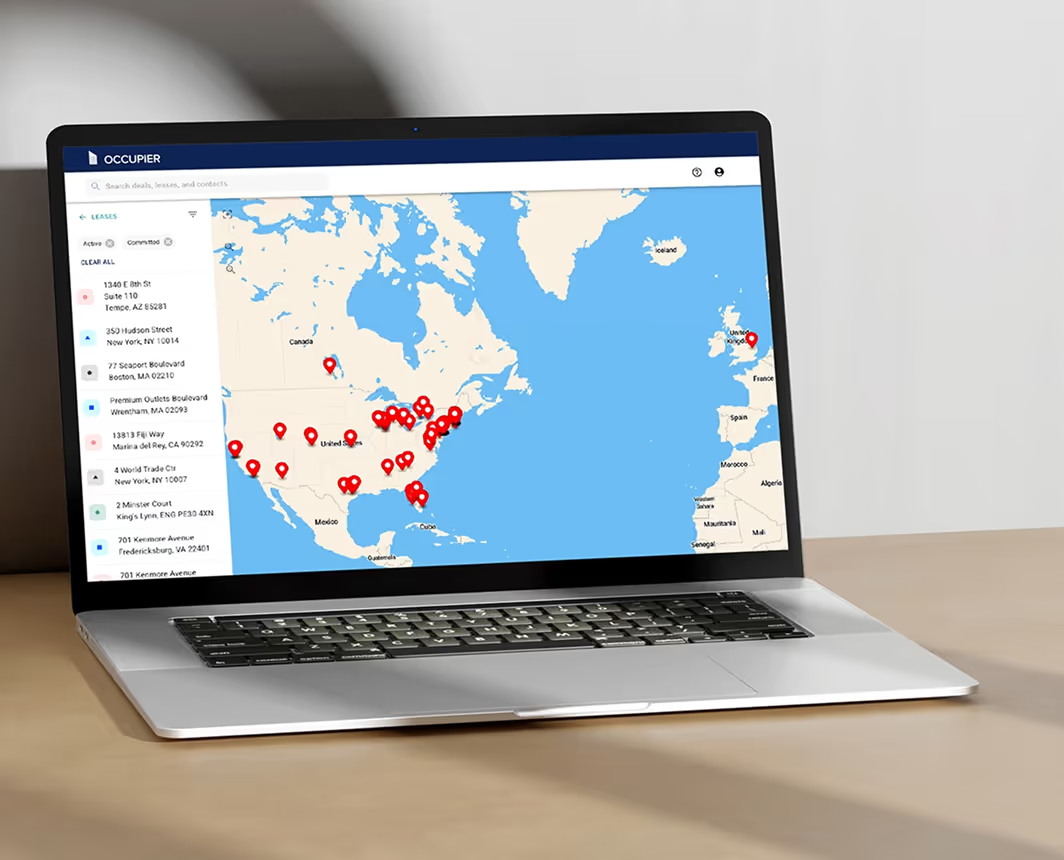
Learn how Occupier centralizes lease data, automates critical workflows, and keeps real estate and finance teams aligned without compromise.
Boston HQ
Size:
15,000 sq ft
15,000 sq ft
Renewal options:
90 days notice
90 days notice
Lease expiration:
March 2026
March 2026
Status:
Action required
Action required
Amend Lease
Set Alert
Frequently Asked Questions
Lease accounting software turns lease terms into the numbers a financial statement needs: the right-of-use asset, the lease liability, the amortization schedule, the journal entries, and the disclosure tables. The calculations are not the hard part. Keeping them accurate while leases change is, and that is where a platform earns its place over a spreadsheet.
Occupier is built for tenants managing multi-location portfolios, where a lease amendment signed by the real estate team has to reach the accounting calculations before the month closes rather than after.
Occupier is built for tenants managing multi-location portfolios, where a lease amendment signed by the real estate team has to reach the accounting calculations before the month closes rather than after.
Lease management handles the operational side—tracking leases, managing renewals, monitoring critical dates, and organizing lease documents. Lease accounting focuses on financial compliance—calculating ROU assets and lease liabilities, generating journal entries, and producing reports for ASC 842, IFRS 16, and other accounting standards. Occupier combines both in one platform so operations and finance work from the same verified lease data.
- Classification of each lease as operating or finance against the five ASC 842 criteria
- Present value of lease payments using the rate implicit in the lease, an incremental borrowing rate, or the risk-free rate election
- The right-of-use asset, adjusted for prepaid rent, deferred rent, incentives, and initial direct costs
- Amortization and interest schedules for the full term, retained for audit after every change
- Remeasurement when the term changes, an option is exercised, payments are modified, or an index-linked payment resets
- Separation of lease and non-lease components, or their combination where the practical expedient has been elected
- Impairment of the right-of-use asset when indicators are present
- Disclosure outputs: maturity table, roll-forward, weighted average remaining term, weighted average discount rate, and cash flow supplemental amounts
Yes. Occupier runs lease administration and lease accounting on the same lease data, so real estate and finance teams never have to keep two systems in sync. Real estate manages critical dates, renewals, clauses, and documents. Finance gets ROU assets, lease liabilities, journal entries, and disclosures under ASC 842, IFRS 16, GASB 87, and FRS 102, all from the terms real estate keeps current.
Auditors get the reports they typically ask for, generated from the same data finance uses to close: trial balance, lease roll-forward, maturity schedules, and footnote disclosures. Every entry has a change log, so finance can answer auditor questions by pulling a report instead of rebuilding a spreadsheet.
IFRS 16 uses a single lessee model, so every qualifying lease is accounted for the same way: depreciation on the right-of-use asset and interest on the lease liability. ASC 842 keeps the older split between operating and finance leases, so the classification step that IFRS 16 skips still has to happen under ASC 842.
Companies with entities that report under IFRS 16 need the right-of-use asset, the lease liability, and the amortization schedule to come out of the same lease data feeding any ASC 842 books the rest of the business runs in parallel. Occupier calculates all three under IFRS 16 from the lease data your real estate and finance teams already keep current, so adding a standard doesn't mean rebuilding the calculation from scratch.
Companies with entities that report under IFRS 16 need the right-of-use asset, the lease liability, and the amortization schedule to come out of the same lease data feeding any ASC 842 books the rest of the business runs in parallel. Occupier calculates all three under IFRS 16 from the lease data your real estate and finance teams already keep current, so adding a standard doesn't mean rebuilding the calculation from scratch.
Occupier has a pre-built NetSuite integration that sends journal entries directly to your books, available on Enterprise plans. For SAP, Oracle, Sage, and other ERPs, Occupier exports journal entries ready for your close process, and Enterprise customers can add a custom integration built for their system. Talk to us about your ERP and we'll show you how it connects.
Most customers go live within 4–6 weeks of signing. Occupier extracts key terms from your lease PDFs, your team reviews them, and finance confirms discount rates and transition balances before the first close.
Last updated: September 30, 2026